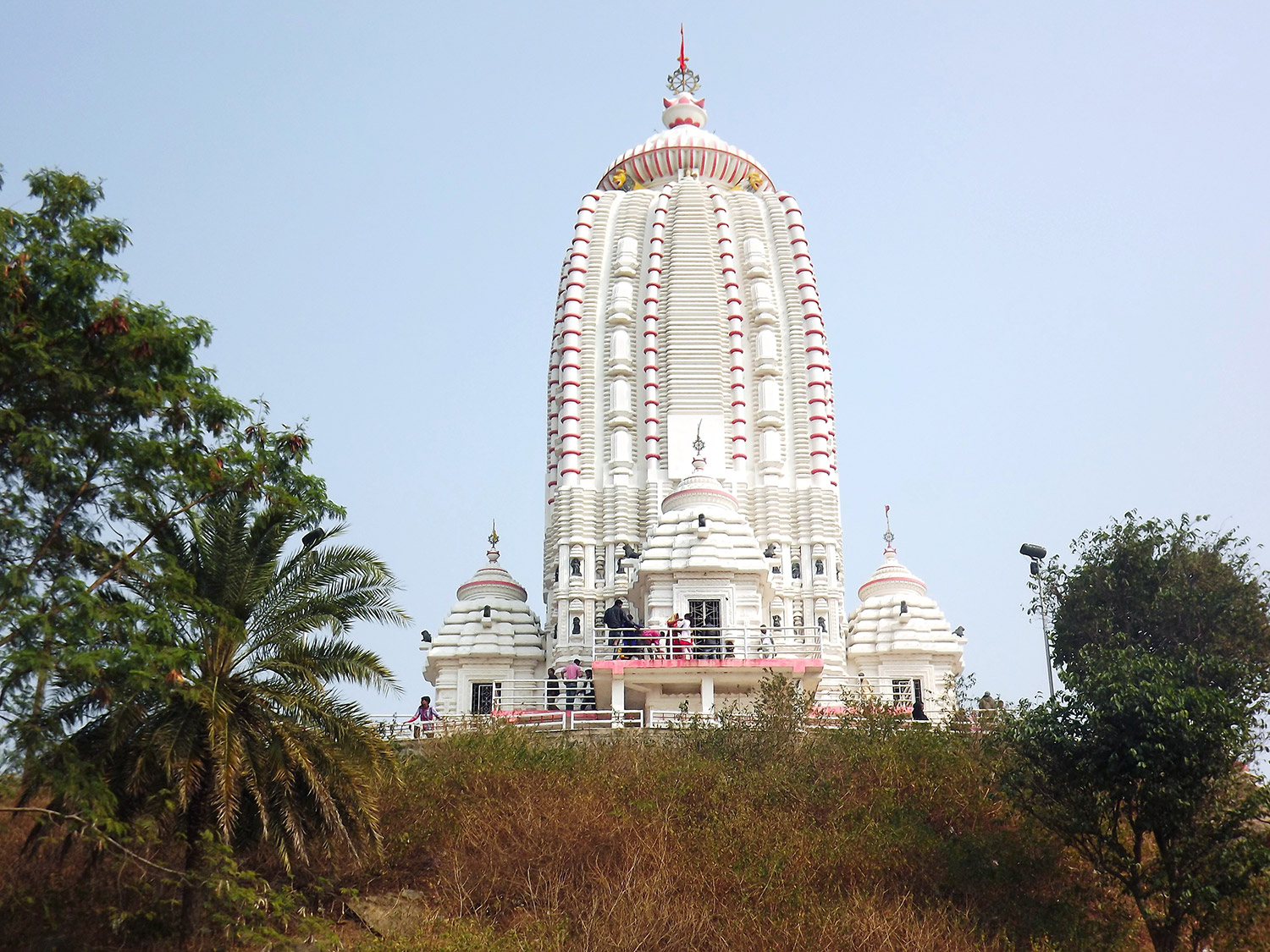

On a lonely little hilltop that rises abruptly in a still scenic countryside, stands this sixteenth-century temple that proved instrumental in establishing the worship of the deity Jagannath in present-day Ranchi, Jharkhand.
Originally commissioned by a Hindu zamindar and closely modeled after the world-famous Jagannath temple at Puri, located some 537 odd kilometres away in a region that was once known as Kalinga (Odisha), it is an authentic product of the ancient Kalingan school of temple architecture that flourished from the 7th century onwards and a pilgrim destination in its own right.
Possibly built by the hands of native Odishian architects and artisans well versed in skill and knowledge of their trade, and who may have been specifically employed for the task.
Yet what exactly led to its creation?
While some sources tend to suggest the temple was built to counter the growing influence of Christianity in the region, this is an unlikely case as the period in which the temple was built precedes the arrival of the first missionaries almost by a century – see the Farbound.Net story: The Gossener Evangelical Lutheran Church: A pioneer of the faith.
What is more likely is the construction of the temple sprouted from the religious sentiments of a person whose forefathers perhaps once hailed from the neighbouring region of Kalinga (Odisha) itself or for whom Jagannath was a patron deity. Attesting to the fact is the history of Ranchi, Jharkhand which abounds with numerous references of kings and rich landowners known as zamindars of Odishian lineage, coexisting with the older local tribes.
Furthermore, there is enough credible information to support the former assumption, regarding the construction of the temple.
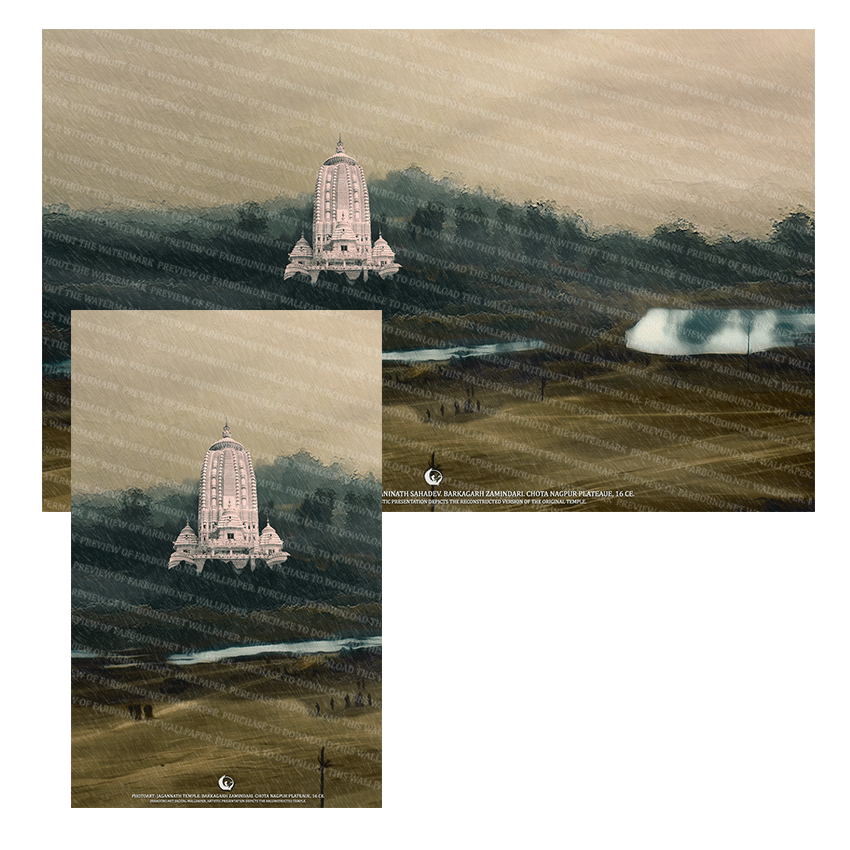
Farbound.Net Digital Wallpapers: Jagannath temple of Thakur Aninath Sahadev from the Barkagargh Zamindari.
Thakur Ani Nath Shahdeo, the Zamindar who commissioned the construction of the Kalingan structure.
Sources inform us that this temple was commissioned by Thakur Ani Nath Shahdeo, a zamindar who owned the zamindari of Barkhagargh in the 16th century. While it is not known when the construction began, a marble cenotaph inside the temple tells us it was completed on the 25th of December, 1691 Ce.
There are also many unauthenticated accounts and myths that reveal how the temple came to be. While one such account reveal that Aninath Shahdeo was instructed in his sleep to build the temple by the deity himself when he was visiting Puri on a pilgrimage. A second, and a more plausible one at that, informs, he was a great devotee of the deity.
Ani Nath Shahdeo’s zamindari of Barkhagargh was in the 16th century located in what later, and for a brief time, was the Lohardaga district. It had encompassed a large part of Chota Nagpur and had comprised of several villages including Dornada, Ranchi and Hatia.
Jagannathpur, where the temple stands, was possibly his capital at a later date, as according to some sources, the village of Satrangi, near Subarnarekha was formerly his headquarters. The Subarnarekha is a river which originates near the village of Nagri in the district of Ranchi and flows through West Bengal and Odisha.
The temple was built during the reign of the Gurkani emperor Aurangzeb and when the Gurkani (Mughals) had held sway over the region. The zamindars of Barkhagargh, the Nath Shahdeos, were possibly vassals who paid tribute.
Historical accounts further inform, the temple was desecrated and vandalized on the orders of Aurangzeb in 1691 Ce, which may perhaps have been a retaliatory response to a rebellion staged by Barkhagargh.
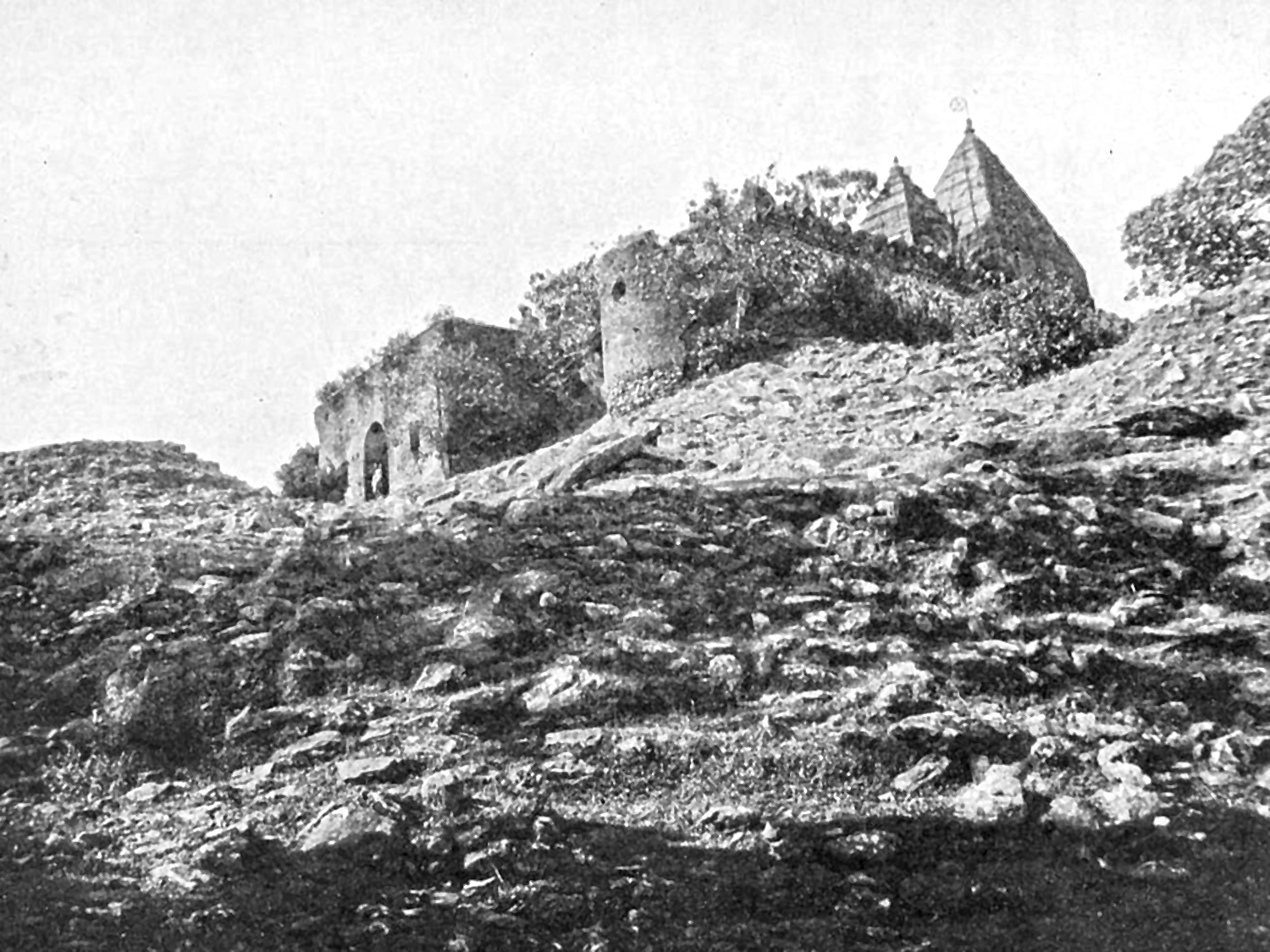
The Kalingan structure in 1857.
During the revolt of 1857 Ce, the sacrosanctity of the temple is believed to have spurred the Barkhagargh Zamindars to revolt against the East India Company.
Bishwa Nath Sahadeo, a descendant of Ani Sahadeo, was a zamindar who is stated to have harboured strong ill will towards both Christianity and the East India Company. In the August of 1857, this zamindar had declared hostilities on the pretext, that the Gossner Evangelical Lutheran Church, erected in 1855, had violated the sanctity of the temple.
Historians, however, hold the view that the real reason behind his resentment towards the East India Company was the fact that the trading firm had made ‘Ranchi’ the administrative headquarters of the region. and the adjoining village of Dornada, the military headquarters of the Ramgargh Sepoy Battalion of the Bengal Army without the approval of the Barkagargh zamindars – and thus undermined their authority in what was their territory.
Initially kept in check by other zamindars loyal to the East India Company, Bishwa Nath Sahadeo was later apprehended, put on trial and executed near the Commissioner’s Compound in Ranchi. No reprisal of any kind is known to have been carried out against the temple during the British period.
Collapse, restoration and daily use of the Kalingan heritage.
On the 6th of August in 1990, a portion of the temple collapsed for reasons that are not clearly known, although heavy rains and quite possibly neglect was the primary cause.
Restoration work commissioned by the State Government facilitated the rebuilding of the structure in 1992. Since then it has been actively used by residents of the city and adjoining areas for daily obeisance and household ceremonies, barring side the months of June and July during which time takes place the legendary Jagannath Chariot procession, similar to the one at Puri.
A ritual in which the idol of the deity is placed on a massive wooden chariot and ferried out for a temporary spell of fresh air before being brought back. Organized shortly after the the holy structure was erected, the event was and continues to be a massive communal gathering drawing into its fold members of all communities including the tribals – as well as devotees from other neighbouring states.
Jagannath, a mysterious deity.
Majorly worshiped in India’s eastern states including Odisha, Bihar, West Bengal, Jharkhand and to some extent in Assam and Tripura, by both Buddhists and Hindus, Jagannath is one deity whose origin continues to be contested in academic circles.
Absent from the ancient Vedic texts which abound with references to several present-day gods and goddesses, his abrupt appearance out of nowhere has led scholars to even suggest his earliest idol to be a Buddhist relic. Furthermore, this deity is the only one in the Hindu pantheon whose image is represented by a block of wood.
The temple is open on all days for visitors interested in paying their respects to the deity or exploring a bit of historic Eastern architecture dating back to the 7th century.
I F I This is an independent story highlighting the history of Thakur Ani Nath Shahdeo’s Jagannath Temple in Ranchi, Jharkhand. It has been curated from historical documents, literary sources and information procured from local media. For additional information on the temple, visit the Jharkhand Government website at: Jagannath Mandir, Durwa, Ranchi. I