Built by a woman prime minister of the Mughal court.

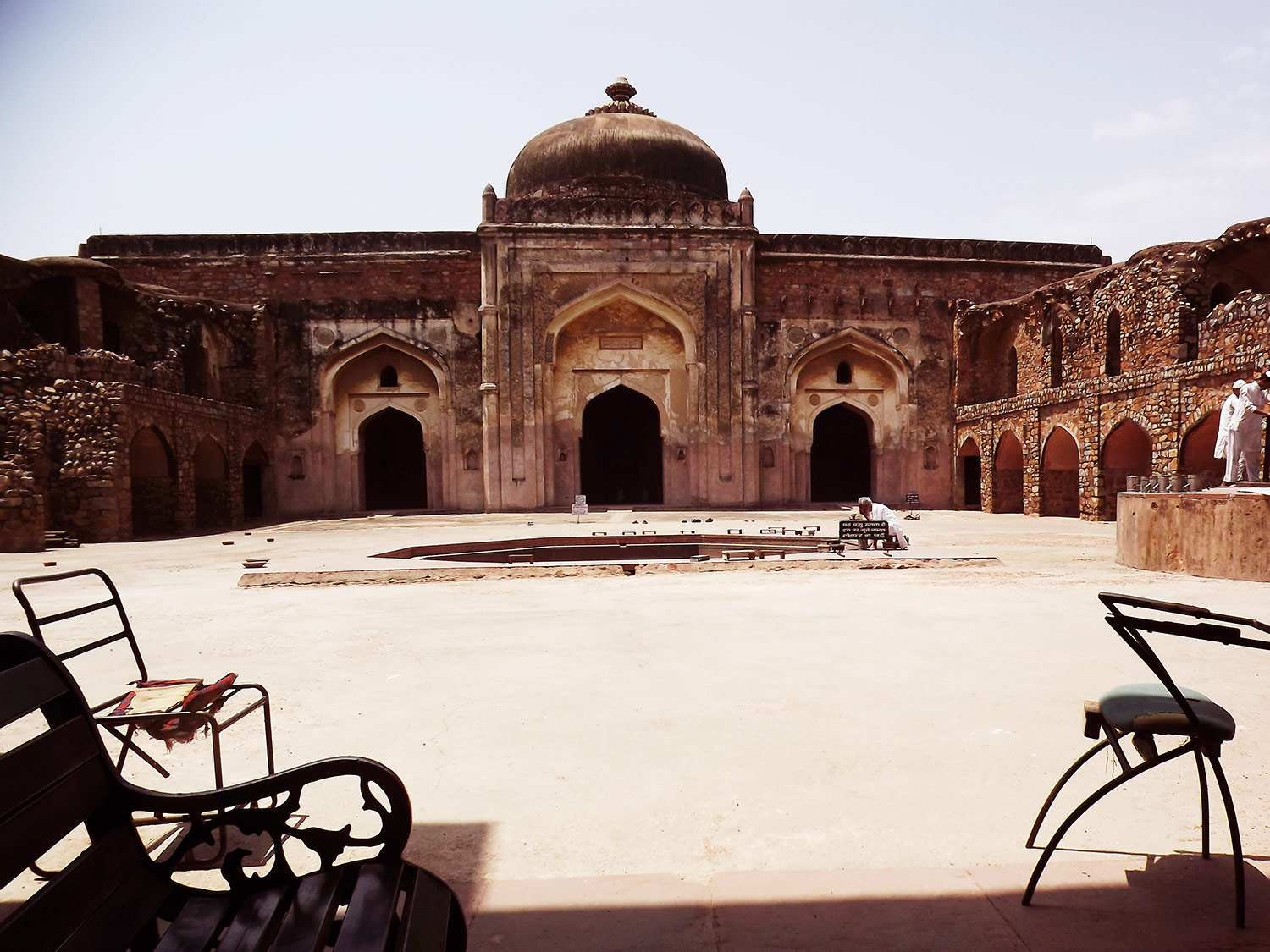
The mosque of Maham Agna.

Opposite Din Panah Entrance (old fort), New Delhi, India.
The Mosque of Khair-ul-Manzil.

Women seldom held power in the male-dominated Mughal society, especially those from humble origins. But Maham Agna, the wet nurse of Akbar the Great, was an exceptional lady. Who inspite her lowly status in the royal harem rose to the premier rank of Vakil –us-Saltanate (prime minister) and remained an influential member of the Mughal court till a rash decision by her son had them both branded traitors to the throne.

In his famous historical work, the Akbarnama, Mughal era historian Abul Fazal celebrated her virtues as a capable administrator, recording the efficiency with which she handled the matters of state better than men of her position.
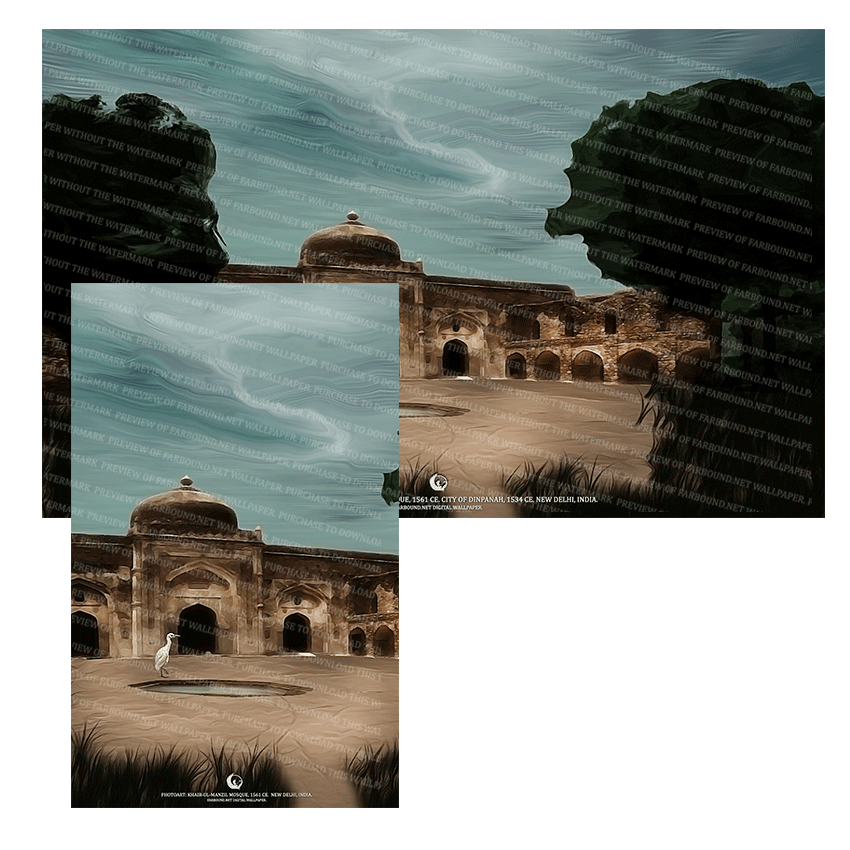
Farbound.Net Digital Wallpapers: Showing a photoart presentation of the Khair-ul-Manzil mosque, 1561 CE.

Digital Wallpapers by Farbound.Net featuring the Khair-ul-Manzil.

Built-in 1561 AD, this six hundred-year-old vestige of early Mughal era architecture was the Khair-ul-Manzil, a mosque cum educational institution. It was commissioned by Maham, perhaps as a subtle expression of her power and devotion to Islam.

After Akbar had her son Adham (and his childhood friend) tried and executed as a traitor – for murdering an appointed court official and entering his sleeping chamber with a sword in hand, she succumbed to her grief not long after.
Popular in History

Wars of Humayun.

A list of battles of the second Gurkani emperor Humayun.

What's new

Indulge

Browse and Buy

More Stories

Who were the Harappans?

Excavate out of an earthen grave, the skeleton comes from the Harappan city of Rakhigarhi

Bred for war. Honored in art.

Remnants of an ornamented granite pillar reveals an empire's love for equines

Prince Kamran Mirza.

In the story of Humayun, Kamran Mirza has been portrayed as a villain. But was it really so?

Ugersen Baoli, Delhi’s underground summer retreat.

The stepwell was once a popular retreat to escape the blistering summer heat

Wasn’t it John Duncan Spaeth who said it?

Origin of the phrase the sun never sets on the British empire and its witty rejoinder.
Siddhartha Mukherjee
Siddhartha Mukherjeehttps://farbound.net
I believe in the wisdom of self-reliance, the moral philosophy of liberalism, and in individualism. When not researching and writing editorial content or creating digital products, I spend my time with my dogs and live a life of solitude.

LEAVE A REPLY

Please enter your comment!
Please enter your name here

Featured Stories

How the Bengal army came to be an army of robust Sepoys.

Delving into the fascination of populating the Bengal army with impressive Prussian type native Sepoys.