
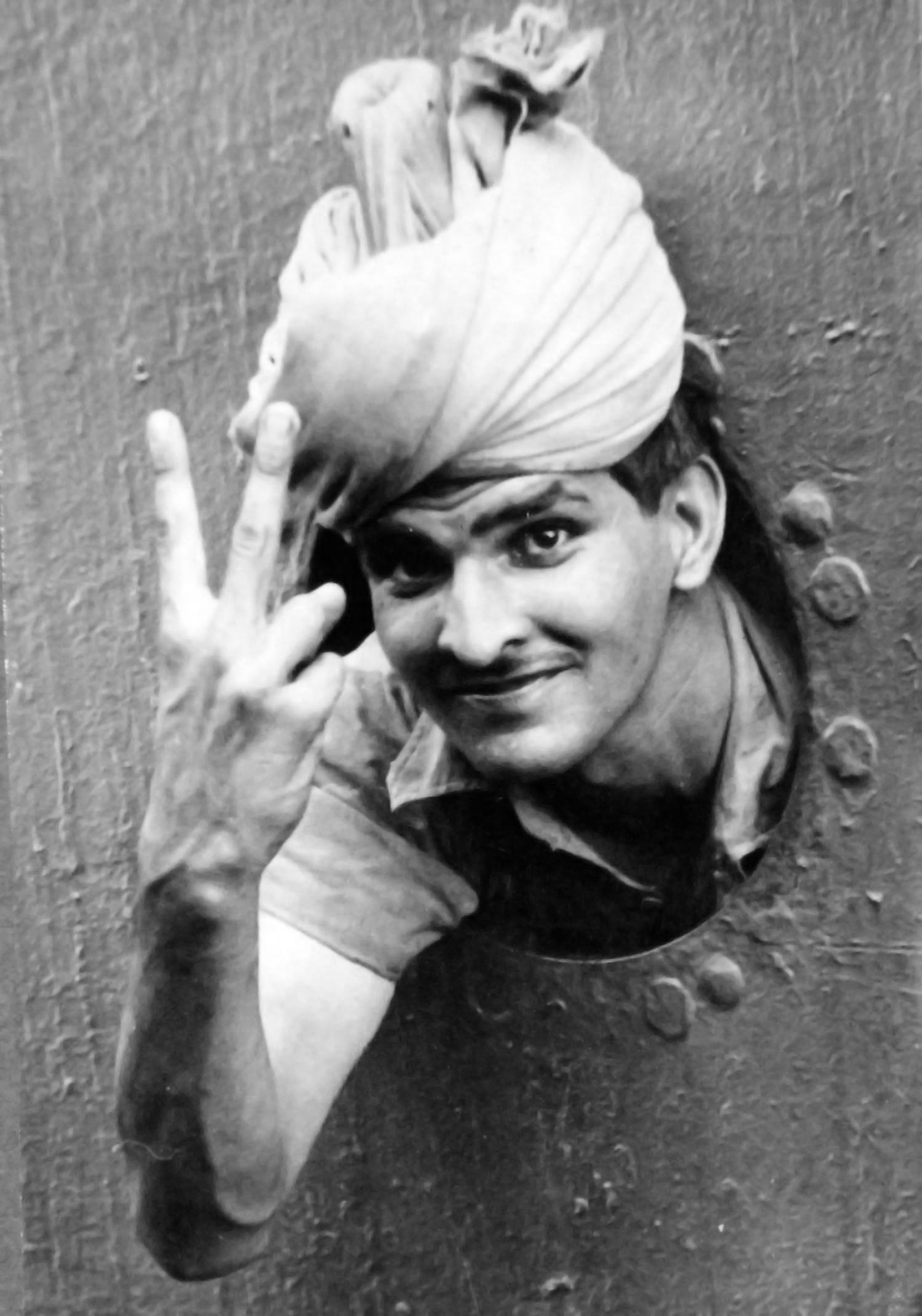

An unknown Indian soldier of the British Indian army makes the V sign from the porthole of a ship, in this photo produced on the 1st of November in 1941.
The soldier was part of the Indian IIIrd Corps sent to Singapore to combat the Japanese invasion of the Malay peninsula, earlier on the 8th of December in 1941 – and it is entirely possible that he may have participated in the Battle of Singapore in the February of 1942.
Battle of Singapore, 1942.
In the engagement, an 85,000-strong allied army, comprising of Australian, Indian, Malayan and regular British divisions, had suffered a crushing defeat at the hands of the Imperial Japanese Army.
Out of a speculated 55,000 Indian personnel who participated in the action, close to 40,000 were taken prisoner by the Japanese after the fall of Singapore.
The Indian National Army.
Indian extremist and revolutionary, Rash Behari Bose, in alliance with the Japanese, recruited some 30,000 of these men to form the Indian National Army, on the 1st of September in 1942.
In this endeavour, Rash Behari Bose was aided by Japanese Intelligence Officer, Major Iwaichi Fujiwara and defector Mohan Singh.
A soldier of the British Indian Army, Mohan Singh had personally recruited the men to form the army and likewise is credited as its founder. He belonged to the 1st Battalion of the 14th Punjab Regiment which during the war in Malaya was a regiment of the Indian IIIrd Corps.
Mohan Singh was persuaded to defect by Iwaichi Fujiwara – often referred to as the Lawrence of the Indian National Army, after the fame of colonel T.E. Lawrence.
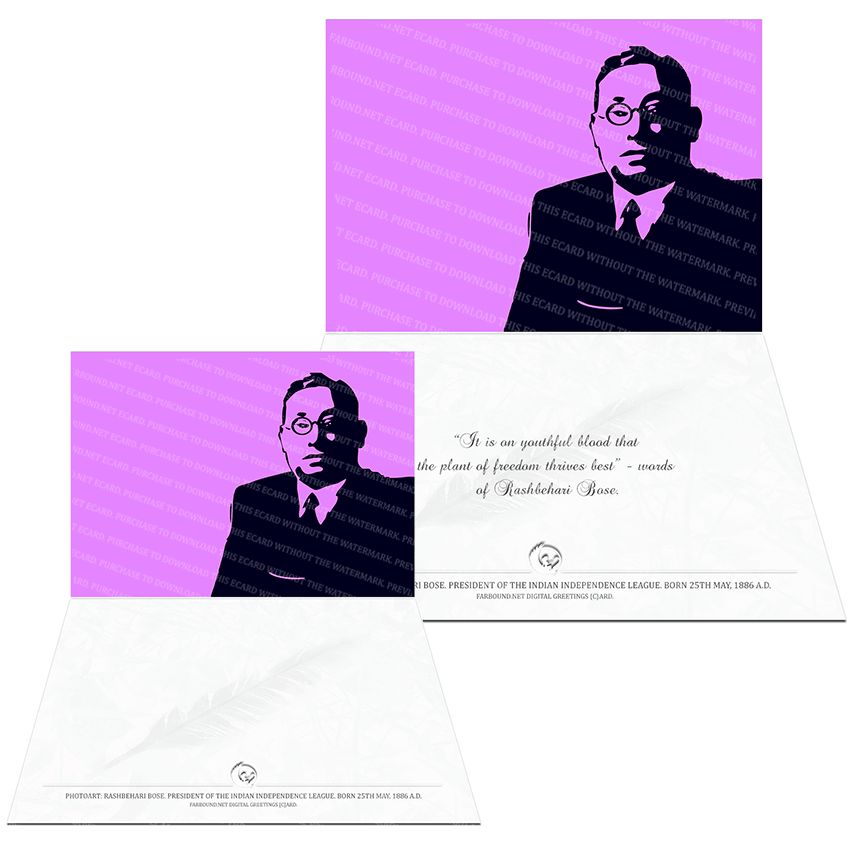
Greetings Cards by Farbound.Net featuring Rashbihari Bose.
Actual Dimension: 1200 x 1203 pixels.
Under Rashbehari’s successor, Subash Chandra Bose, this revolutionary army, reinvigorated and additionally bolstered with new recruits, had fought and perished alongside the Japanese in Burma.
On the 22nd of June in 1944, during what was the Battle of Imphal (March-July, 1944), the Indian National Army and its parent, the 15th Japanese army, was decisively defeated and forced to retreat by the IV Corps of the British Indian Army – now the Gajraj Corps of the Indian Army.
Among the 16,000 men captured, approximately 11,000 were put on trial and in accordance with army disciplinary rules were sentenced to be punished. Out of these 11,000 men, only a few were sentenced to be executed but were eventually pardoned by the British Indian Government.
After the Independence of India in 1947, however, these men comprising of former soldiers and enlisted civilians were not incorporated into the modern day Indian army for their association with a political group, their mutinous conduct and defection to the enemy. They were, nonetheless, recognized as freedom fighters in 1972.
Their compatriots on the other hand, the soldiers who remained loyal, had rotted in Japanese prisoner-of-war camps, till rescued by Allied forces.
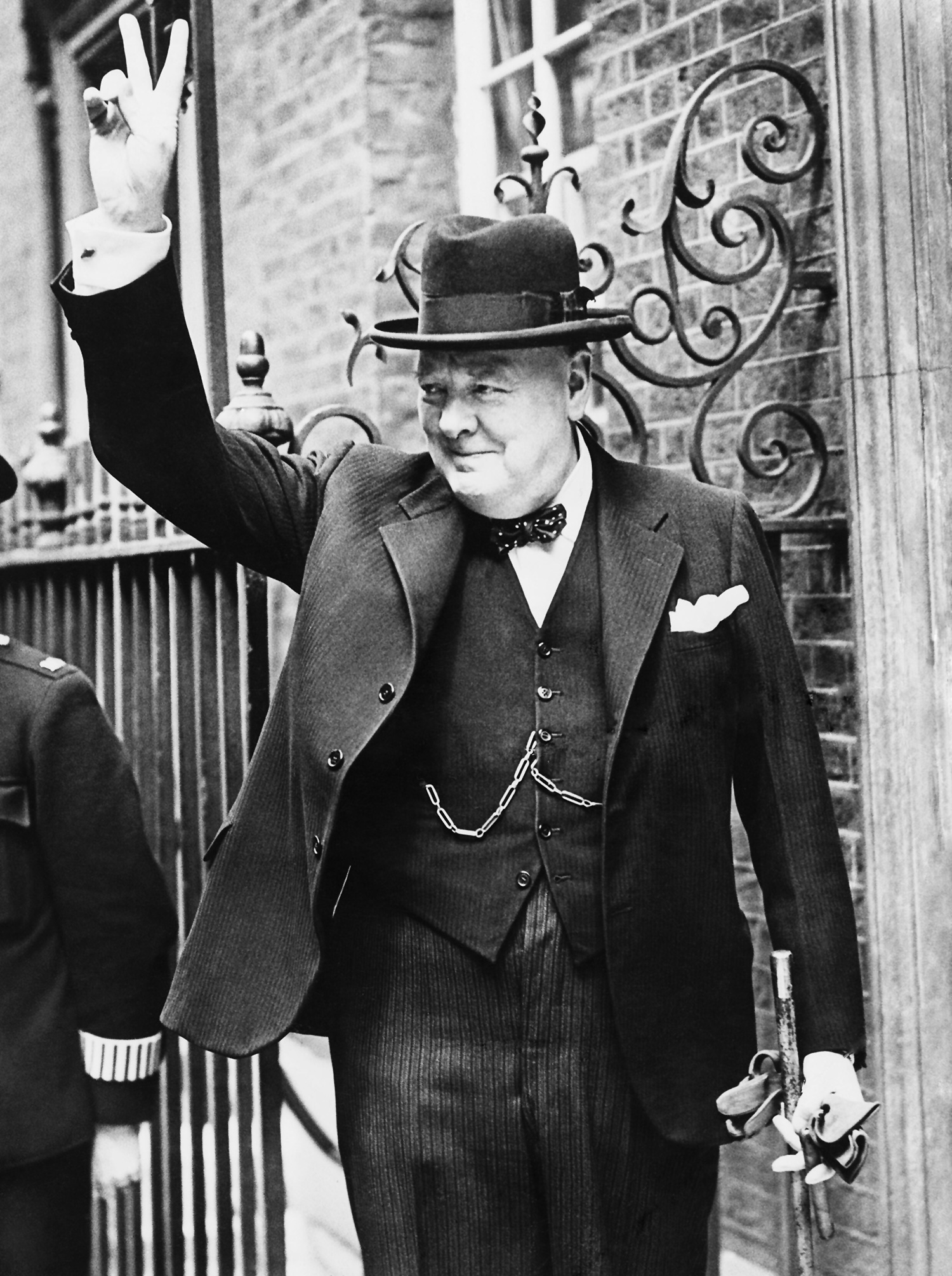
The V Sign the soldier is making.
The V sign was properly presented with the palm facing outwards. The alphabet was first mentioned by Belgian minister in exile, Victor de Laveleye, on the 14th of January in 1941. The V represented the first letter in “Victoire” (victory in French) and “Vrijheid” (Freedom in Dutch). The sign, however, was made popular by Winston Churchill.
See the Farbound.Net Story: V for Victory.
When reversed (palm facing inwards) the sign was an insult – similar to the raised middle finger. The Indian soldier in the photo was unaware of the latter connotation and in essence was making the Victory sign.
Even in modern day India the reverse V sign is not widely known as an insult or ever used as an insult. In India, the sign is presented with both the palm inwards and outwards, and implies Peace or Victory.
The Photo.
This photo was produced by an uncredited member of the Film and Production Unit of the British Army. The photographic unit was a special division, tasked with documenting the role of Allied forces in World War II.
The original caption attached to the photo reads: He gives the sign ‘V’ from the porthole of a ship as he arrives at Singapore, and his is backed by million Indian troops and the rest of the Empire as well.
The photo is archived with theImperial War Museum in the U.K., and is a part of the Ministry of Information’s Second World War Official Collection.
The fate of the soldier in the photo is not known.
I F I This is an Independent Story produced to highlight this Vintage Photo of an unknown Indian soldier making the V sign in 1941. The story also sheds light on why he was in Singapore. It has been created from facts curated from literary and historical sources. I




excellent information.