
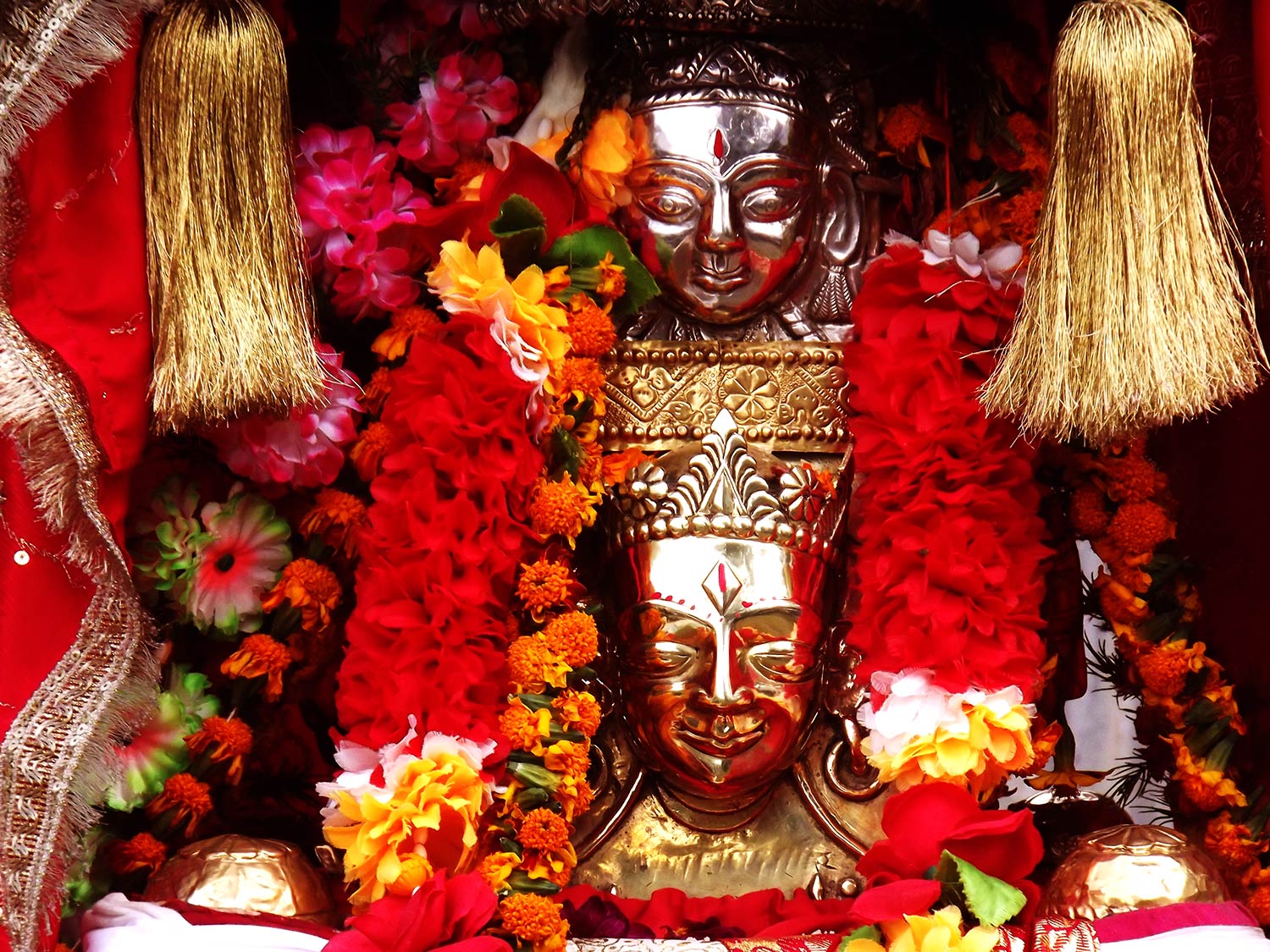
All in the divine scheme of things.

Dusshera in Kullu differs vastly from the traditional ceremony observed in the rest of North India.

The finely sculpted features of a benevolent goddess from Banjar, an adjoining valley 58 km away from the town of Kullu, present a picture of serene tranquillity, amid garlands of fresh flowers, during the annual festival of Dusshera.

Almost always represented with metal sculptures of only their faces, and which are quite similar in appearance, each has a unique identity and place in the divine hierarchy.

The deities are highly revered by the local populace, and consulted for every need, ranging from exorcising evil spirits, stories of which abound in the valley, to advice and guidance in matters of business, happiness and marital bliss.
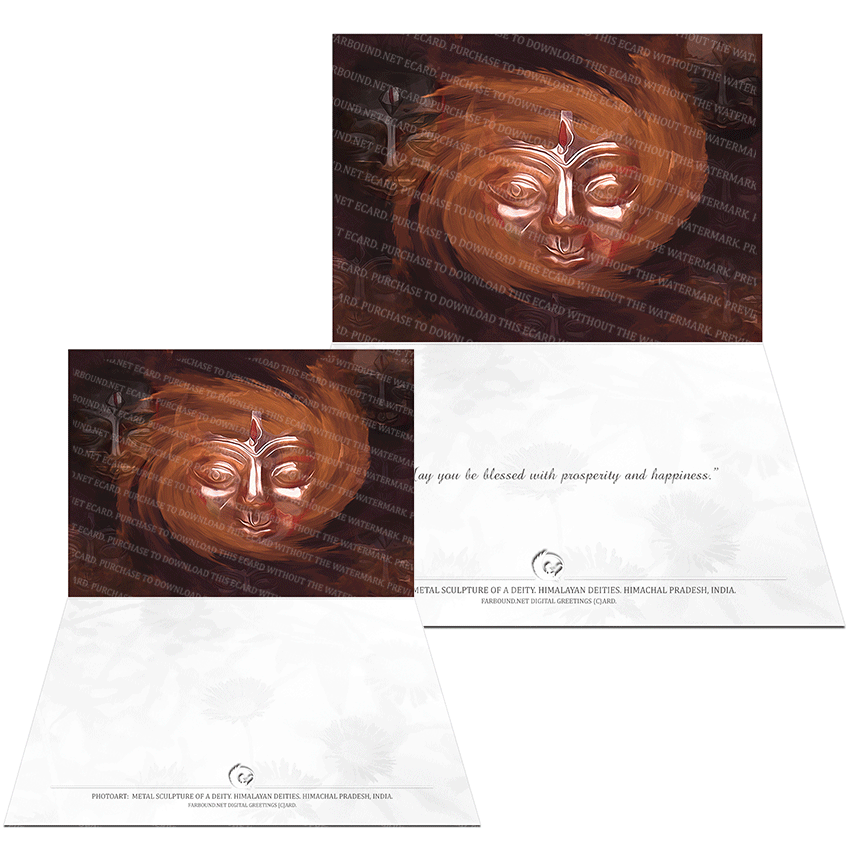
Farbound.Net Digital Greetings Card: Showing a photoart presentation of a metal sculpture of a Himalayan deity.

Greetings Cards by Farbound.Net

Actual Dimension: 1200 x 1203 Pixels.

During the festival of Dusshera, which begins as the Bengali festival of Durgostava ends, all divinities are customarily expected to congregate in the town of Kullu to witness the traditional chariot ride of the presiding god Raghunath. Some years, however, a few will choose to be absent, expressing divine displeasure with rivals, the people or proceedings – more practical minds label as human politics.

Dusshera in Kullu differs vastly from the traditional effigy burning ceremony of the demon king Ravana observed in the rest of North India. As per some sources, Himachal is home to over three hundred gods and goddesses, residing in numerous villages and towns.
Popular in Culture

Wars of Humayun.

A list of battles of the second Gurkani emperor Humayun.

What's new

Indulge

Browse and Buy

More Stories

There is no place like Connaught Place in Delhi.

Built in the 1930s as a business hub, Connaught Place in New Delhi is the pulsating heart of the city

How the Bengal army came to be an army of robust Sepoys.

Delving into the fascination of populating the Bengal army with impressive Prussian type native Sepoys.

What ended the Mauryan Empire?

Rock edicts, like the Junagadh rock edict reveal Ashoka's patronage of Buddhism.

Touchdown in Autumn: The Spangle swallowtail Butterfly.

A female of the Spangle Papilio Protenor species poises like a future age plane

A jumble of myth, history, narrative and nationalism.

The phrase that is the First War of Indian Independence traces its origin to 1907
Siddhartha Mukherjee
Siddhartha Mukherjeehttps://farbound.net
I believe in the wisdom of self-reliance, the moral philosophy of liberalism, and in individualism. When not researching and writing editorial content or creating digital products, I spend my time with my dogs and live a life of solitude.

LEAVE A REPLY

Please enter your comment!
Please enter your name here

Featured Stories

How the Bengal army came to be an army of robust Sepoys.

Delving into the fascination of populating the Bengal army with impressive Prussian type native Sepoys.