There is no place like Connaught Place in Delhi.

Built in the 1930s as a business hub, Connaught Place is the pulsating heart of New Delhi, India.

Connaught Place
New Delhi, India.

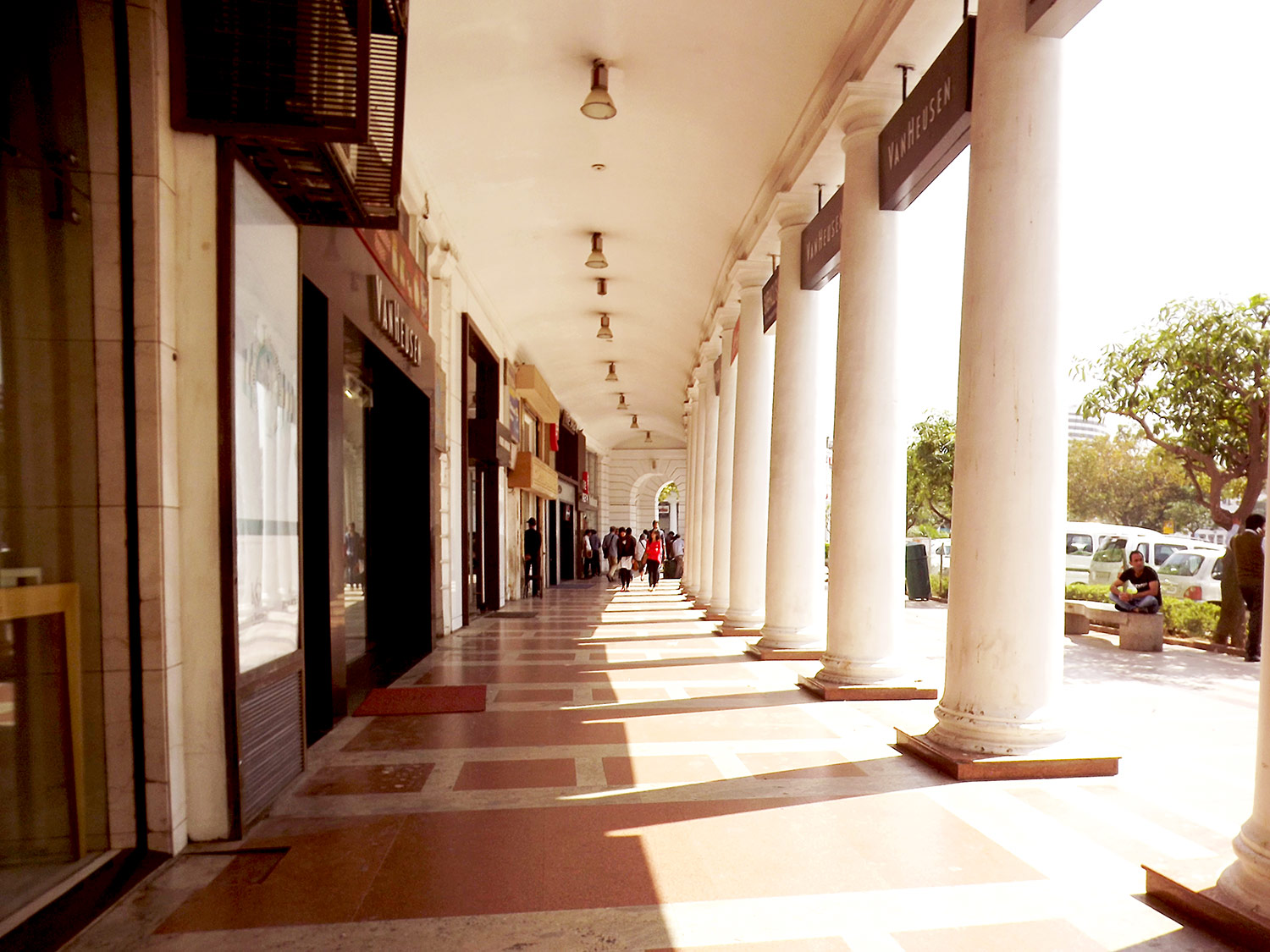
On a bright sunny day, the white colonial pillars of Connaught Place arches past a flood of incoming pedestrians out browsing shops and high end retail outlets for their daily doze of fun – soon to submerge the portico in front (visible in the photo) from morning to late evening, Monday to Saturday till Sunday, an official holiday, brings in a change in pace.

Built in the 1930s by British architect Robert Tor Russel, the imperial era vestige is a monumental symbol of the former glory of British India, marking the transfer of the seat of the government from Calcutta (present day Kolkatta) to New Delhi.

Constructed in the same decade as the Viceroy House ( Rashtrapati Bhawan, the residence of the President of India) and the House of Parliament (now the Indian Parliament), the entire complex is a twin ring one encircling the other with a central park in the center, and many of its resident establishments as old as the place itself – such as the Regal Cinema Hall and Quality Restaurant.

The heritage site still very much the commercial center it was intended to be abounds in shops, cafes, fast food joints, specialty dinners, pubs, multiplexes, airline offices and the best crowds you can hope to come across in Delhi – in fact for both tourists and citizens, lingering around in the white grandeur of this historic landmark is a sure shot way to beat the blues.


Popular in Places

Wars of Humayun.

A list of battles of the second Gurkani emperor Humayun.

What's new

Indulge

Browse and Buy

More Stories

Built by a woman prime minister of the Mughal court.

A mosque that was sponsored by Gurkani emperor Akbar's wet nurse, Maham Agna

Tears of Shiva.

A giant size statue of Shiva and consort Sati enact a passage from Hindu mythology

Lodi Gardens.

A 90 acres natural paradise popular for its lush greenery and historical attractions

Good journalism. But instigating journalism.

An illustration that beautifully presents the brutality of 1857, and how 18th century Journalism used it to evoke pathos.

Tagore Hill: The hill of poets and playwrights.

A wooded hill that once was the property of a Bengali playwright.
Siddhartha Mukherjee
Siddhartha Mukherjeehttps://farbound.net
I believe in the wisdom of self-reliance, the moral philosophy of liberalism, and in individualism. When not researching and writing editorial content or creating digital products, I spend my time with my dogs and live a life of solitude.

LEAVE A REPLY

Please enter your comment!
Please enter your name here

Featured Stories

How the Bengal army came to be an army of robust Sepoys.

Delving into the fascination of populating the Bengal army with impressive Prussian type native Sepoys.