

Feared, revered and edified longer than they have been vilified, snakes have been an object of worship since even before modern-day humans walked out of Africa to colonise the known world.
In 2006, archaeologist Shiela Coulson had scoured the expansive Kalahari Desert for history. Located in Southern Africa, this large semi-arid savanna of picturesque red sand dunes and wildlife preserves ancient archeological records of early human origin and evolution, and she was on a mission to unearth the earliest signs of human activity.
Inside a cave of the Tsodilo Hills, that rises northwest of Botswana, and is known to contain some 4,500 rock art paintings and over 100,000 years of human history, she chanced upon an artifact that didn’t just push the origin of ritual practices back to nearly 70,000 years, but also revealed the enormous span of time humans have worshiped one of the planet’s deadlier species.
This discovery was an ancient python stone indented with primitive tools to appear more life-like (see the Applon article: World’s oldest ritual discovered).
Rock hard evidence that waited out the centuries to explain why snakes could have with such ease hissed, slithered and slid into the very heart of ancient cultures separated by time and distance with practically no knowledge of the other.
Cultures, such as that of the Aztecs in prehistoric Mexico, Mesopotamia in the Middle East and the ancient Koreans of the far east, who left behind intriguing legends and myths born out of a shared fear of the reptile and respect for its power.
Yet were all these myths and legends, a product of man’s imagination?
The Nagas of ancient India: Mythical beings endowed with the ability to transform at will into humans and giant serpents. Anthropomorphism or inspired art?
Though prehistoric India was populated by the Austroloid race, a descendant branch of the population that migrated out of Africa, and among whom snake worship would plausibly have been common knowledge as it was with their ancestors, the earliest mention of snake cults, however, comes from the texts of the Indo-Aryan people.
A descendant branch of the Indo-Europeans who dwelled centuries ago on the Pontic steppe near the Blacksea, and a sub branch of the Indo-Iranians who appeared as the Sintasha culture to produce the world’s first spoked wheel chariots, the Indo-Aryans were a nomadic pastoral people who had migrated into India during the waning days of the Bronze Age, and then over the centuries subjugated or assimilated earlier tribes to found empires and leave their legacy in the form of Hinduism and the language of Sanskrit – see the Farbound.Net story: The indomitable Saraswati: From a river to a strong willed independent woman, the evolution of a Rigveda deity.
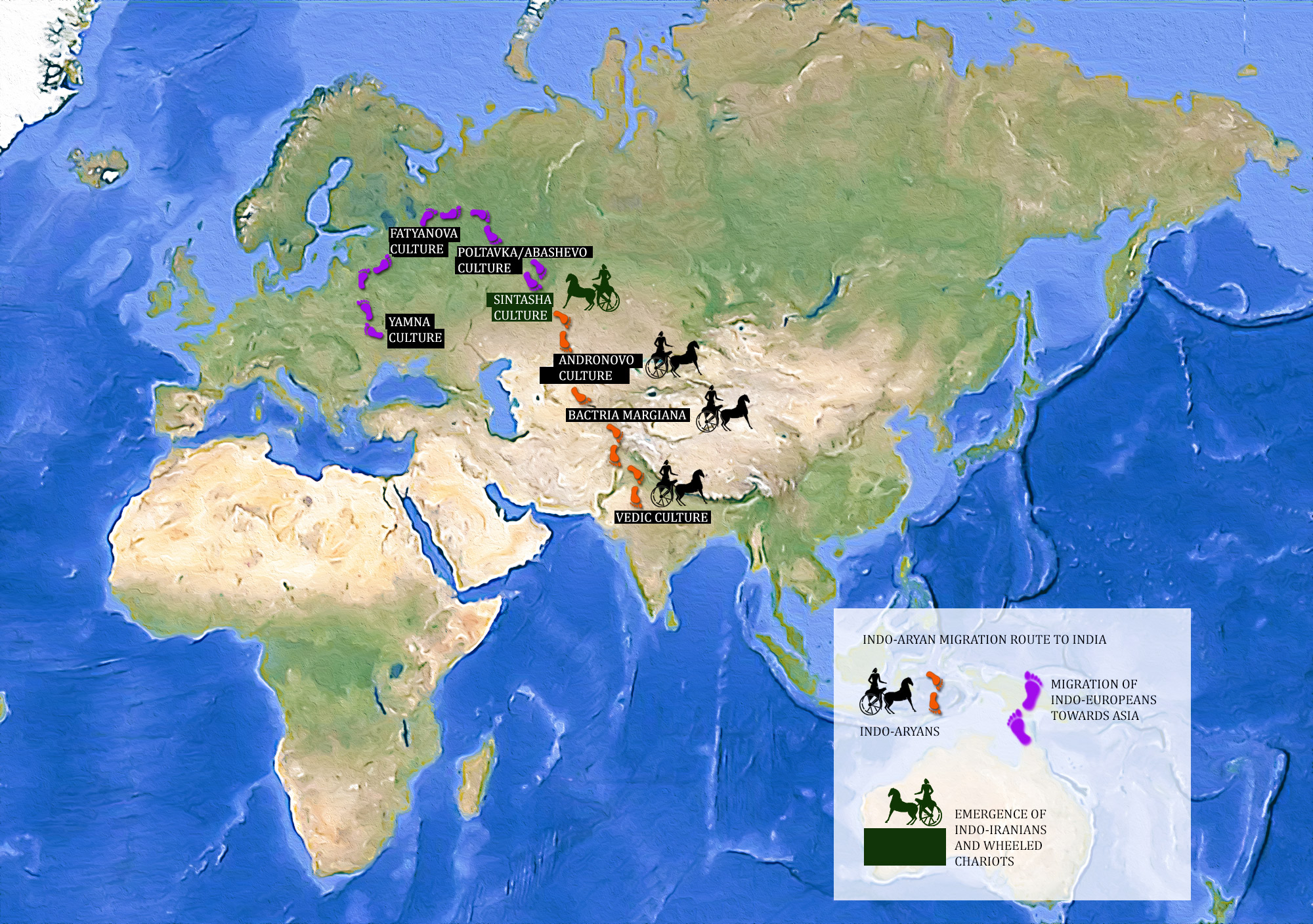
In the oral literature fathered by the wise men of these tribes, there had appeared during their time in India, mention of a people that later gave rise to the legend of the half-man, half-serpent beings of mythology.
Not because some Indo-Aryan tribesman had been unfortunate enough to pick a quarrel with one such being and then watched in horror as it had transformed into a serpent, but more probably because these nomadic pastoralists tribes had encountered a people who may have worshiped the Cobra and depicted the deadly reptile as their tribal totem.
A symbol that visually and linguistically related to the word they reserved for the Cobra, the ‘Naga’, and not ‘Sarpa’, the word they used to describe a common snake.
Connecting the Nagas to the Cobra would have begun with the discovery of the tribe’s affinity for the reptile for worship or use as a symbol.
Vivid descriptions in Vedic texts of the ‘Naga’ tribes, especially their women, and various other historical material that took shape over the centuries, have tended to confirm the existence of the ‘Nagas’ as a people in India, Cambodia and Sri Lanka.
Thus, contesting the view that their depiction in later Vedic mythology as mythical beings capable of transforming at will into either humans or snakes was not a mere product of anthropomorphism dreamed up by poets and narrators, but rather a form of symbolism inspired by a real people and their possible association with the serpent.
To confirm their reality in the 19th century, some historians had gone the distance, and to the point of even curating information collected by travelers and explorers since the age of classical Greece. One among them was the historian, professor A.K. Mazumdar.
According to Mazaumdar, these so-called Serpent tribes known as the ‘Nagas’ were, in fact, a branch of the Tibetan-Burmese people who had migrated into India from the North East sometime around 4000 Bce. In his view, these Nagas were physically similar to east Asians in features – and had boasted of high cheekbones, muscular frames and very little facial hair.
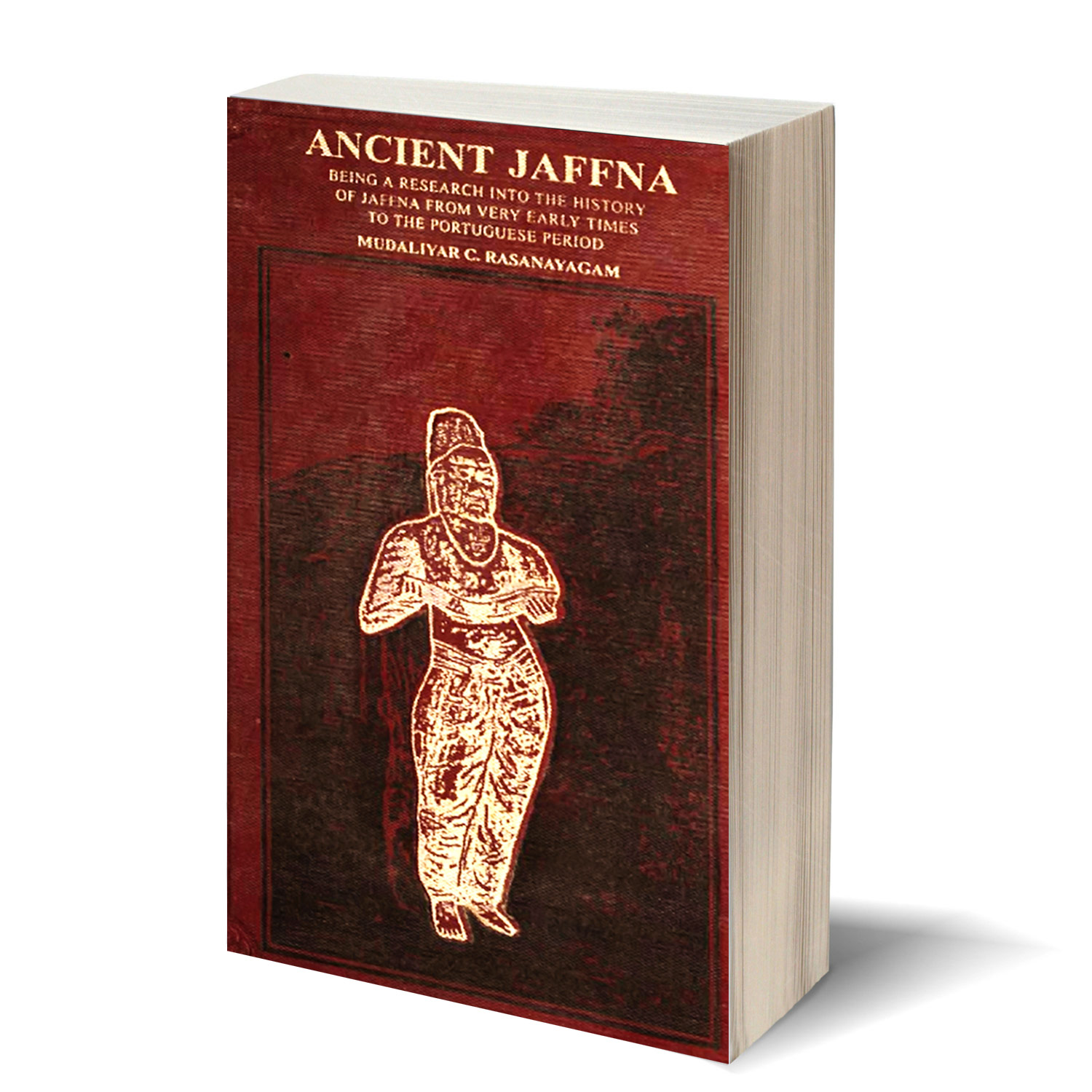
Scholars like Mudaliyar C. Rasanayagam, author of the book Ancient Jaffna, published in 1926 Ce, while disregarding the ‘Nagas’ as a serpent cult, had yet upheld the theory of their existence in antiquity, by claiming their association with the serpent and the symbol of the cobra, was the result of an elaborate headgear that resembled a hood.
According to Mudaliyar, the arrival of the Indo-Aryan pastoralists had later forced the ‘Nagas’ to migrate southwards, and they had eventually reached Ceylon – known in antiquity as Lanka.
Dedicating a full chapter to the ‘Nagas’, Mudaliyar was of the opinion that they were the more ancient race to have arrived in India and had lived alongside other indigenous tribes of their time, including the Harappans.
Mudaliyar further believed, the ‘Nagas’ by this time had gradually become a more mixed-race through intermarriages with other local tribes, including both the Harappans and the Indo-Aryans Vedics.
Other scholars, more inclined towards the snake cult origin of the ‘Nagas’, have described them as a tribe that was closely familiar with the ways of the serpent, knew the art of handling the reptiles, and may even have developed a local form of anti-venom to combat its poison, as well as used its venom to coat weapons of war.
Poetic residues of which can be gleaned from the Ramayana and the Mahabharata, as the serpent weapons of Nagastra and the Nagapasha – arrows that could paralyze one’s opponent.
Prominent Naga deities of mainstream Hindu mythology.
Furthermore, later mainstream Hindu mythology, which evolved out of accumulated Vedic texts composed over the centuries, has continued to offer clues. Among these clues are the five principal ‘Nagas’ that have come to hold centre stage in Indian culture.
Ananta-Shesh Naga (Unending Serpent): This serpent deity is described as a thousand-headed serpent that carries the world on its head. He was later inducted into Vedic lore as the bed on which Vishnu sleeps. It is possible that Ananta-Shesh Naga was a ‘Naga’ deity or chieftain of importance, for his allusion to be associated with the super god of the Vedics.
Kaliya Naga: A poisonous serpent that dwelled in the river Yamuna till he was vanquished by Krishna of the Bhagavata Purana. Unlike the other ‘Nagas’ of mythology, Kaliya’s history more clearly reveals him to be a human king of flesh and blood of an ancient place known as Kaliramaa, near Mathura. His descendants are thought to have been around till the rise of Islam in India.

Digital Greetings Cards By Farbound.Net for Goodwishes, ft. a Historical Painting.
Actual Size: 1200 x 1203 Pixels.
Taksha Naga: The chief of a ‘Naga’ clan that lived in the Khandava forest, generally thought to be in the region of Delhi. The epic Mahabharata mentions that his clan was wiped out along with several other tribes when the Pandavas set fire to the forest to build their imperial capital city of Indraprastha.
This decimation left Taksha little choice but to relocate and establish his kingdom in a region that later came to be known after him as Takshila (now in present-day Pakistan). Later texts mention Taksha avenging the death of his race by slaying a descendant of the Pandavas. The episode is a possible genocidal event of the ancient world arising from a feud between the Vedics and other indigenous tribes of the time.
Astika Naga: A half-Brahman, half-Naga sage who stopped a near annihilation of the ‘Naga’ race. Astika’s mixed parentage is highly suggestive of inter tribe alliances and marriages between the Vedics and the ‘Nagas’, and as stated by Mudaliyar. C. Rasanayagam in the book, Ancient Jaffna.
Another allusion is the wedlock of the Pandava prince Arjuna to Ulupi, a ‘Naga’ princess – in the epic Mahabharata.
Digital Wallpapers by Farbound.Net with Balakrishna and Kaliya Naga
Vasuki or Basuki Naga (the serpent that adorns Shiva as a sacred Brahminical thread): In western Himalayan folklore, Vasuki is the father of the eighteen serpent deities whose temples stand in present-day Himachal Pradesh, India.
Vasuki may have been a ‘Naga’ chieftain or a ‘Naga’ deity. Vasuki’s close association with Shiva, a possible allusion to friendly ties or alliance between the ‘Nagas’ and some indigenous tribe that worshiped the ascetic god. Or perhaps, Vasuki, by this time may have been assimilated into Vedic lore.
Mansa Naga (sister of Vasuki): Mansa is primarily worshiped in Bengal and in the northeastern states of India. In folklore, the blessing of Mansa is believed to prevent and cure snake bites. Mansa was once a certified tribal goddess of the lower classes of the Hindu cast system till her induction into the Brahmanical system.
Her traits, a possible allusion to the tribe’s knowledge of curing snake bites and harnessing the power of the venom for medicinal purposes.
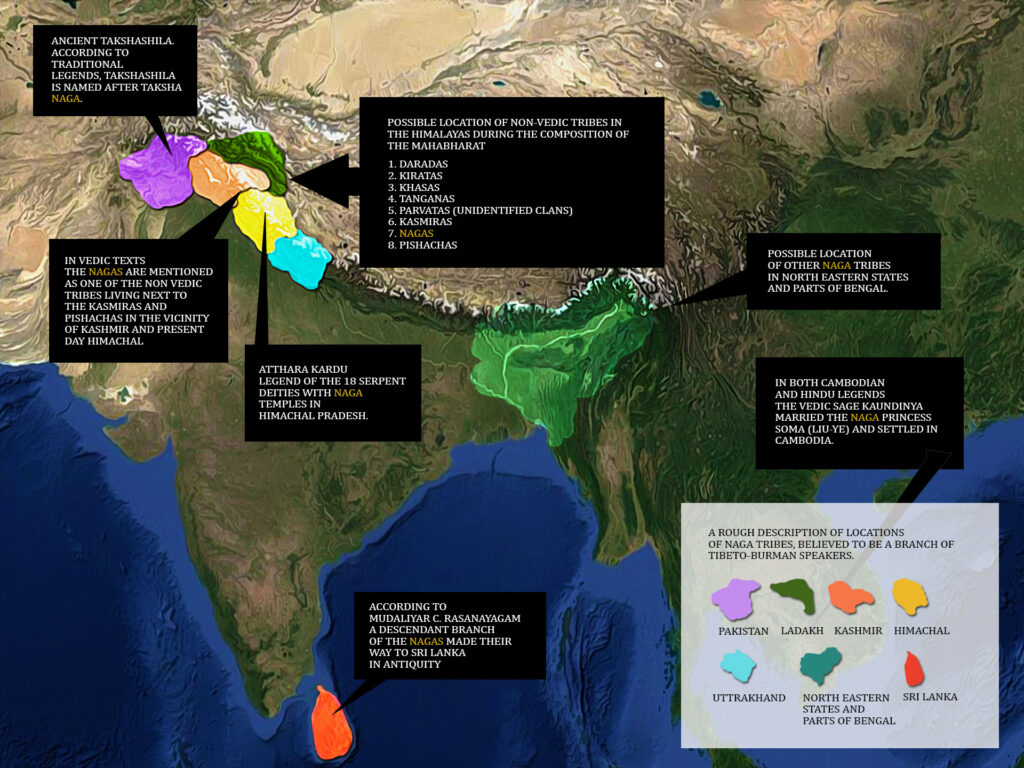
Moreover, in Vedic annals and the history of Cambodia, one also finds mention of the Khmer people, whose origin is supposed to have sprouted from the union of a Vedic sage by the name of ‘Kaundinya’ and the ‘Naga’ princess, ‘Soma (Liu-Ye)’ – indicating Cambodia was already a Tibeto-Burman ‘Naga’ stronghold before the arrival of the Indo Aryans.
Mention of Naga Tribes in the Himalayas, in Vedic epics.
Besides the revelation provided in Hindu mythology, one also finds mention of the ‘Nagas’ as a tribe and people in Veda Vyasa’s ‘Mahabharat’, an epic poem composed to immortalize the Kuru race.
The epic not only mentions the names of several non-Vedic tribes that coexisted with the Vedic Aryans but also their locations, such as the Sudras and the Abhiras; the Nisadas and the Ajas; the Sigrus and the Aushmikas; the Romakas and the Yakshas; the Daradas and the Dravas; the Kasmiras, the Nagas and the Pishachas; the Kiratas and the Khasas; the Tanganas and the Parvatas.
Among these, the epic tells, the Daradas, Kiratas, Khasas, Tanganas and the Parvatas were forest tribes that dwelled in the remote Himalayan mountains. While the Kasmiras, the Nagas and Pishachas were a people to be found in the vicinity of the present day region of Kashmir, bordering the present day state of Himachal in India.
Though Vyasa imbibes some of these tribes with supernatural traits, as was the poetic tradition of the time, scholars, nonetheless, believe the epic is describing real historical tribes. The mention of the ‘Nagas’ dwelling in the Himalayas, in particular, is striking, for it corresponds with the Attara Kardu – a legend from Western Himalayan folklore that tells how the ‘Nagas’ came to be worshiped in the hills of Himachal.
The Atthara Kardu: An extant collection of oral legends related to serpent worship in the Western Himalayas.
If the later Buddhist Mahavamsa, a 5th century chronicle describing the early history of Sri Lanka, tells us of a descendant branch of the ‘Nagas’ living on the Island after their supposed exodus from the Northern plains of India, a chapter from Western Himalayan Folklore (known as the Atthara Kardu) is a composite snap shot of their presence in the mountainous region of the present day state of Himachal Pradesh in India.
A region where it is not uncommon to come across once crude stone mounds now restructured as temples with totems of the hooded cobra adorning its entrance and the resident deity bearing the surname ‘Naga’.
The exact time these ‘Nagas’ appeared in the area is unclear, but almost all legends associated with the rise of the serpent cults, suggest these deities were introduced into the landscape, with the remoteness of the hills working wonderfully to preserve many of their traits.
Including the tribal Shaman who still can be seen acting as an intermediary between the deity and the people in a trance-like state. Animal sacrifices that were banned as recently as 2014, and in the past, even human sacrifices that were periodically offered to the ‘Naga’ deities lest they devour entire villages.
The name Atthara Kardu, comes from one of the several dialects spoken in the state of Himachal Pradesh, and describes how the eighteen serpent deities took up residence in the hills. The name is thought by scholars to have originated from Kadru of the Kashyapa-Kadru legend of Vedic mythology, in which Kadru is portrayed as the mother of all snakes.
The folklore, however, orally recited and passed down from one generation to the next has lost much of its actual history as successive narrators have added their own embellishments and reinterpreted meanings.
This ‘Chinese Whispers’ effect has not only obscured actual incidents and events that may have occurred during the advent of the tribes and the tribes’ ancestral beliefs. But also made the form be found in local folklore today, a chaotic jumble of superstition, mythology and zoomorphism – a prehistoric human tendency of infusing animal traits to humans.
A characteristic remarked upon by British-era historian James Talboys Wheeler when speaking about the ‘Nagas’ in his work, ‘A History of India’.
In the process of time these Nagas became identified with serpents, and the result has been a strange confusion between serpents and human beings
James Talboys Wheeler
Legends of the Atthara Kardu: Before the Vedic assimilation.
Among several versions of the legend associated with the appearance of the ‘Naga’ deities in the western Himalayas, there is the popular theme of Basuki consorting with a beautiful woman of the village of Goshal in the guise of a handsome young man – with the union producing the eighteen serpent deities.
Basuki, however, tells the legend, had no desire to reside at Goshal for long and one day had departed to travel far away lands. But before leaving he had instructed his wife to keep his children inside a bamboo basket and feed them with a bowl of milk each day, with a lit incense placed nearby.
His wife had dutifully obeyed his instructions till one fateful day, forced to leave on an urgent errand she had tasked her sister (sometimes said to be her mother) with the responsibility of placing the offerings.
This other woman, hitherto oblivious, to what was inside the basket had let her curiosity get the better of her, and had unfastened the lid to have a glimpse. Upon espying the nest of serpents, however, she was so terrified that she had accidentally dropped the lit incense into the basket, and thus started a fire.
Scorched by the smouldering embers, suffocated by the smoke and the heat, the panicked serpents had escaped by breaking out of the basket. They had scattered in different directions and made their way to different parts of the Himalayas, to be later discovered by the local populace and edified as deities – with each named after their individual ordeal.
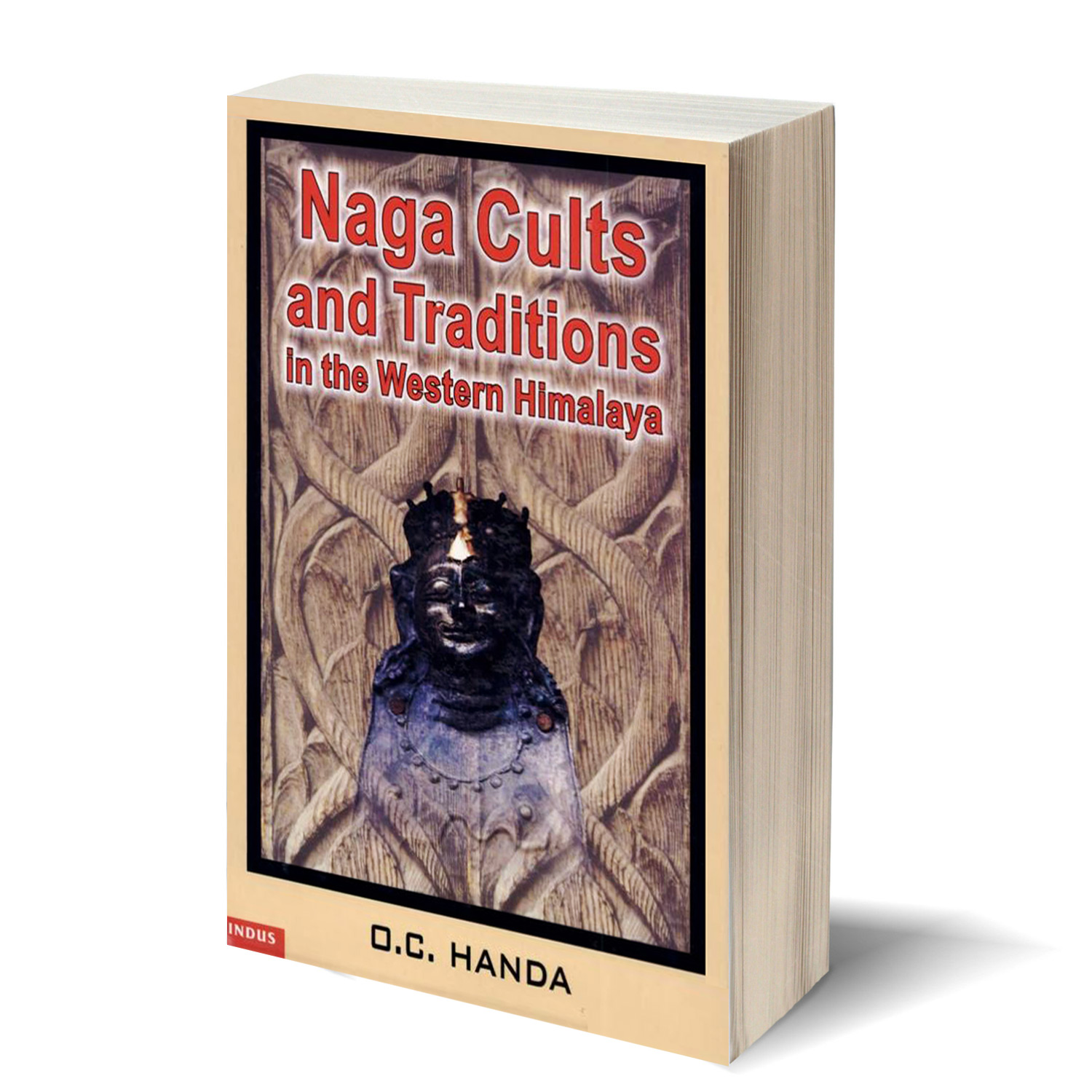
The book ‘Naga Cults and Traditions in the Western Himalayas’, authored by O.C. Handa, records the names of the eighteen serpent deities. Many of them, unique to the hills, not to be found in mainstream mythology.
1. Shrigan Naga: The one who broke out of the basket. Residing deity of the village Bhanara. See the Farbound.Net Story, the Himalayan Temple of Shirgan Naga at Bhanara.
2. Kana Naga or the Goshali Naga: The one with the defective vision, as a result of an injury to his left eye. Residing deity of the village Goshal. See the Farbound.Net Story, the Himalayan temple of Goshali Naga.
3. Dhumbal Naga: The one who suffered burns from the smoke. Residing deity at Kothi Baragarh
4. Kali Naga: Sometimes associated with Kaliya Naga. Residing deity, Shiradh, Raison.
5. Phalal Naga: Residing deity of the village Pirni. 6. Piuli Naga: The one with the yellow skin. Residing deity of the village Batahar. 7. Sogu Naga: Resident deity of the village Sogu Khol in Ralha. 8. Kumara Naga: Residing deity of the village Beasar. 9. Bhadu Naga: Residing deity at Nagar. 10. Balu Naga: Resident deity of the village Chethar in Seraj. 11. Mahuti Naga: Residing deity of the village Kais. 12. Kattheri Naga: Residing deity of the village Dalash in Seraj.
13. Ludra Naga: Residing deity at Manikaran. 14. Chambhu Naga: Residing deity of the village Deugiin Seraj. 15. Kandha Naga: Residing deity of the village Shrigarh. 16. Rai Naga: Residing deity of the village Dethua. 17. Natri Naga: Residing deity of the village Ramgharh Khandi. 18. Chhamahu Naga: Residing deity of the village Golapur.

Digital Wallpapers by Farbound.Net: Temple of Shirgan Naga.
Another version of the same legend, one that may have appeared at an earlier date, mentions only seven children born to Bauski and his wife. In this legend, the mother is not a girl from the village of Goshal but a ‘Naga’ woman who, having taken shelter inside a potter’s shop, had given birth to the seven serpents in an unbaked earthen pot. Which, when put in the fire the next morning, had forced the reptiles to make their escape in a similar fashion.
While the legend preserves the memory of Basuki and his wife as ‘Nagas’, the strong zoomorphism present indicates it may have cropped up some centuries after the advent of the ‘Naga’ tribes in the Western Himalayas – a period that was witnessing actual events gradually receding from memory, with myths taking up their place.
Legends of the Atthara Kardu: After the Vedic assimilation.
A third legend has the Vedic sage Jamdagani bringing home the eighteen ‘Naga’ deities in a bamboo basket after visiting Mount Kailasha. En route, however, tells this legend, Jamdagani was enveloped in a violent storm, and a gale had swept the basket of his head, blowing the deities in the direction of the villages where their present-day temple stands.
Later reproductions of the same legend have the eighteen ‘Naga’ deities replaced or merged with Vedic sages and Vedic deities, a time frame that also changed the selection process of the tribal Shaman. Once handpicked by the deity from any strata of society, he later became one of Bharaminical bearing.
Weaning out the Vedic influence that appears in the form of the sage Jamdagani, this legend is perhaps the closest to explaining the coming of the ‘Nagas’ to India, and as theorised by historian A.K. Mazumdar, who believed the ‘Nagas’ were the Tibeto-Burmese people, and who had penetrated into India from the North East.
The North Eastern migration theory of the Nagas: A contrasting view to the Middle Eastern or Aryan origin.
The mention of the Kailasha peak of the Gandise Mountains, which in later centuries was incorporated into Vedic lore as the abode of Shiva, as was Shiva himself and his companion Basuki, could imply the route some of the wandering ‘Naga’ tribes had followed upon entry.
One that had, perhaps, meandered along rivers and their tributaries, through the hills of the western Himalayas and onto the northern plains, where the tribes had likely met up with the Harappans and others of their kind coming in from other routes, and then proceeded down south and onward to Lanka, with the arrival of the Indo-Aryans.
During this journey, they may possibly have intermingled with other indigenous tribes, including both the Harappans and the Vedics, formed alliances, intermarried, sired children, and planted their own deities and beliefs among them – allusions of which can be traced in both mainstream mythology and local legends such as the western Himalayan folklores.
Modern-day geneticists studying the genetic history of the diverse people of India support the existence of four major branches.
The Austro-Asiatic-speaking people (the Mundas of Jharkhand). The Ancestral North Indians (Euroasians/Aryans). The Ancestral South Indian (Harappans/Dravidians). The Ancestral Tibeto-Burmese (believed to be the “Nagas”).
Out of which the Austro-Asiatic and Ancestral South Indian groups are affirmed to be older. Followed by the Tibeto-Burmese and then the Ancestral North Indian.
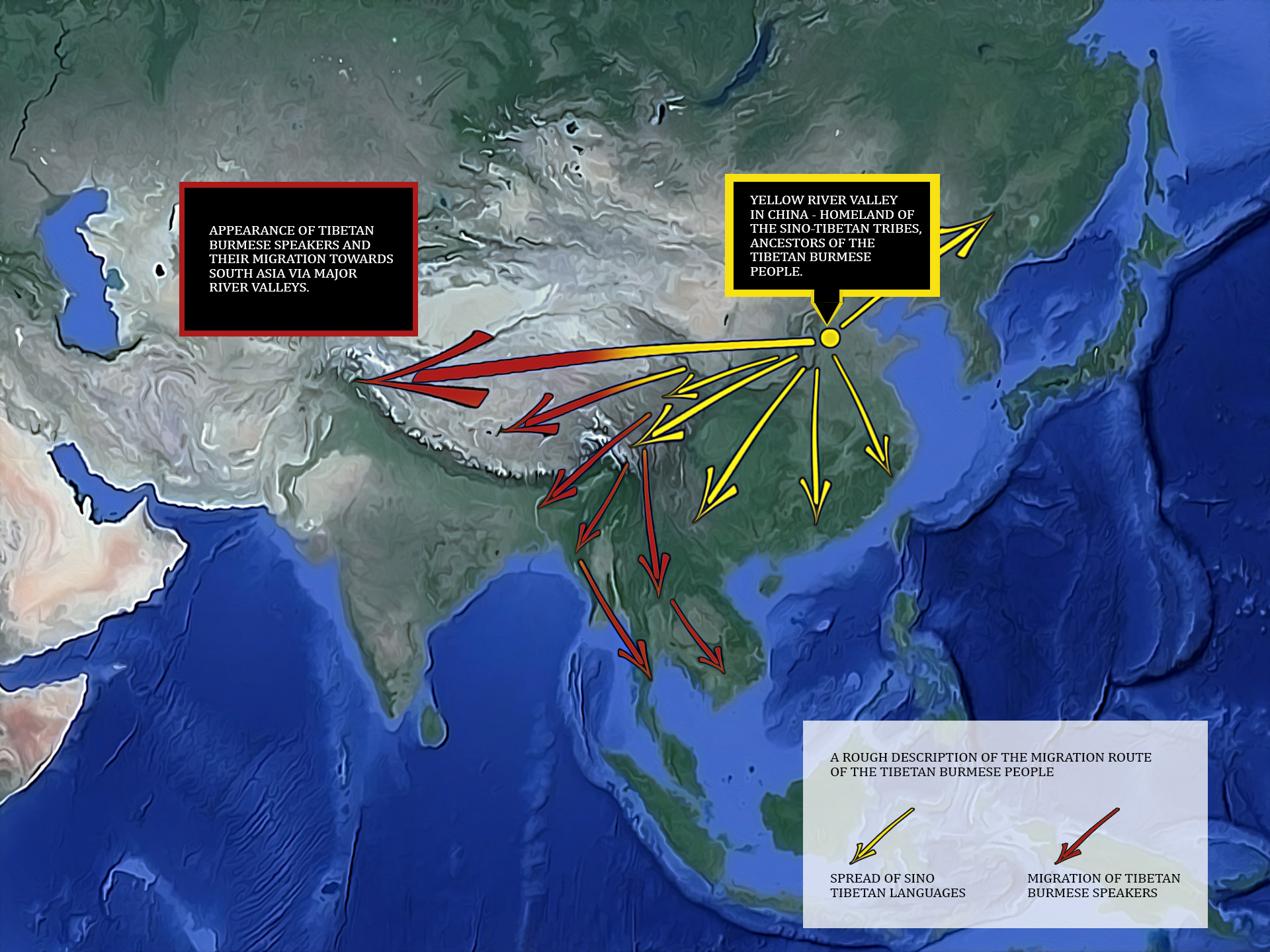
Ancestral home of the Nagas.
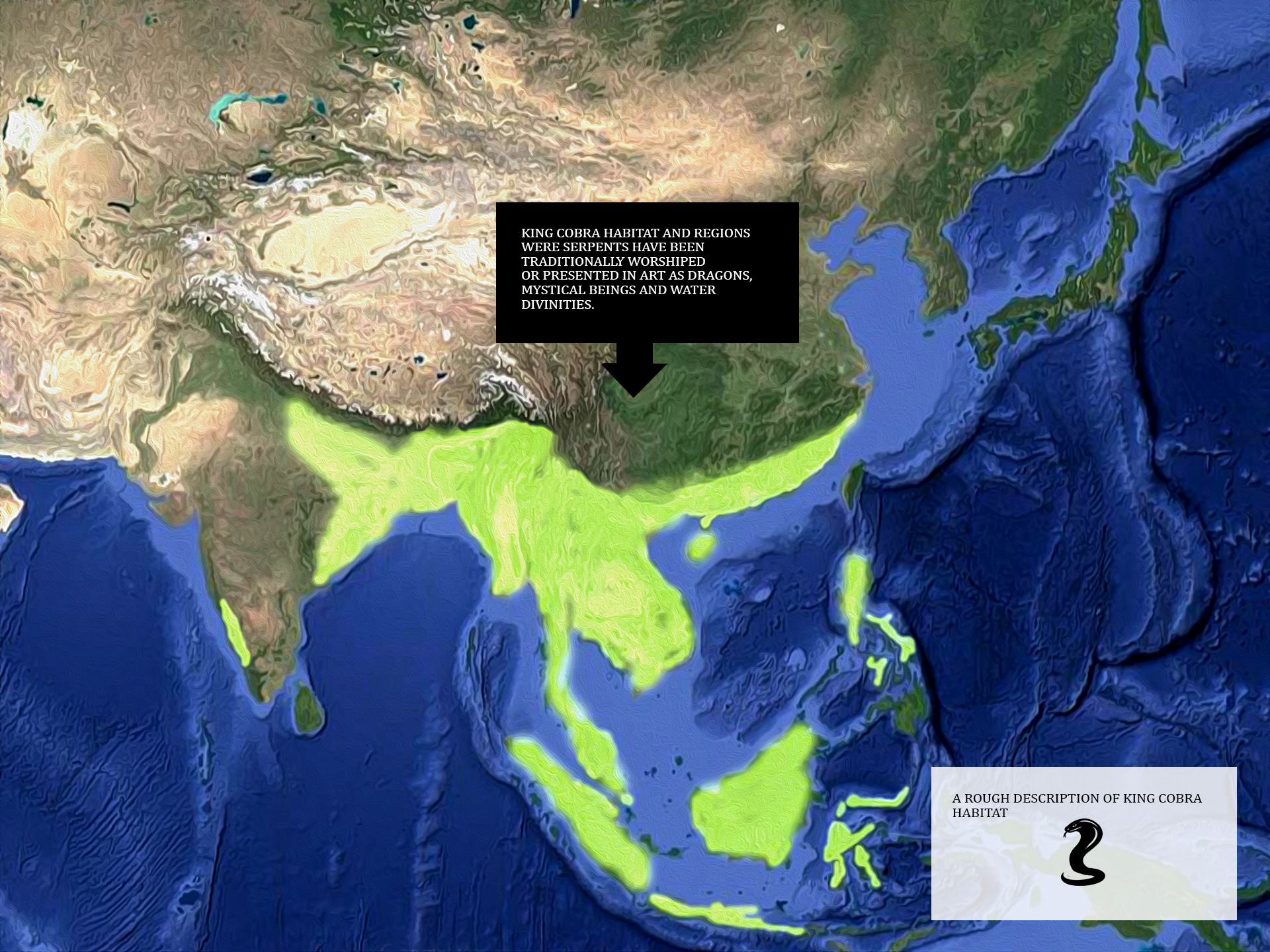
If we are to accept historian A.K. Mazumdar’s view of the ‘Nagas’ as a Tibeto-Burman people trickling in from the north-east, then their original homeland would most certainly be the Yellow River Valley in China and their ancestors the Sino-Tibetan people. During their migration to India, they have very likely passed regions infested with serpents, such as the Cobra and the King Cobra.
Coming of age as a tribe with the serpent as a constant neighbor, these ‘Nagas’ would have then undoubtedly taken to it right from the start. They would have worshiped it, developed rituals to appease it, imprison it in baskets, made use of its image as their totem, named themselves after it, as well as fashioned elaborate headgear to appear more like it, ahead of their migration to newer lands.
The recurring mention of snakes and baskets in the legends of the western Himalayan folklore, may perhaps be indicative of their practice of keeping snakes and serpents within pots and baskets. A practice that may have begun in prehistory, as it can also be found in ancient Egypt, Mesopotamia, Europe and in similar legends coming out of Africa in the form of the rainbow serpent.
There is also the possibility that these ‘Naga’ tribes may even have used the baskets to transport the reptiles when migrating, and introduce them in new locales.

Digital Greetings Cards By Farbound.Net for Goodwishes ft. the temple of Goshali Naga.
Actual Size: 1200 x 1203 Pixels.
The pair of Shiva and Basuki: A combination arising out of an intermingling of Naga and other indigenous tribes, before the coming of the Aryans.
Before their amalgamation and development in Vedic lore, the pair of Shiva and Basuki is believed to have existed much before the arrival of the Indo-Aryans. Cave paintings from the prehistoric era have revealed the crude picture of a man dancing with a trident in hand next to a cow – a depiction that is believed to have inspired the creation of Shiva.
Basuki, as the close companion of Shiva, is believed to have happened at a later date, tenably a result of the coming of the ‘Nagas’, roughly around 4000 Bce, and developing friendly ties with the tribes, which they may have assimilated into their own religion, and which in turn, was later merged into Hinduism.
Nagas, an ancient tribe put on the road to obscurity. Likely as a result of a misnomer started by the Indo-Aryans.
Trying to guess the complete picture with just a few pieces of a gigantic jigsaw puzzle in hand can be an impossible task, especially when events occurred long ago in the past and left behind no concrete evidence other than what can be collected in bits and pieces from literature whose composition has changed over the years.
There always remain too many missing pieces and questions demanding answers, leaving historians and scholars with speculations and theories alone.
To confound matters, in the course of their existence, the ‘Nagas’ intermingled, assimilated and in turn merged into other cultures so many times, that when keeping factual record became the norm, they had completely disappeared as a homogeneous ethnic people with the Indo-Aryans themselves likely responsible for putting them on the road to obscurity by misinterpreting their name, thanks to their affinity for the serpent.
Later inscriptions found in the region of Sri Lanka suggest the name is ‘Naya’.
The eastern migration theory of the ‘Nagas’ isn’t absolute proof of their identity. It conflicts with other views that see the ‘Nagas’ as another branch of the Indo-Aryans themselves or having appeared from the Middle East like the Harappans.
Although there is now little doubt, the ‘Nagas’ existed as a people of flesh and blood, far from their image of serpent beings in mythology. The worship of the serpent was a feature to be found among the Indo-Aryans as well.
In the book ‘Cult of the serpent: An interdisciplinary manifestation and origins’, author Balaji Mundkur states:
Other than Indo-European traditions related to conquests of ethically different people, the Indo-Aryans were primarily not a bird venerating people, opposed to ophiolatry. On the contrary there is good evidence in the Rig Veda that the Indo-Aryans themselves venerated the serpent as did the Europeans the Balts, with whom they were allied in prehistory.
Balaji Mundkur
The only things that can be said with certainty about the ‘Nagas’ is that they are not what Bollywood and Indian television serials portray them as – beautiful men and women who can turn into serpents at will.
I F I This is an independent story on the ancient “Naga” tribes. The story is constructed from facts curated from literary sources and not local information. I