
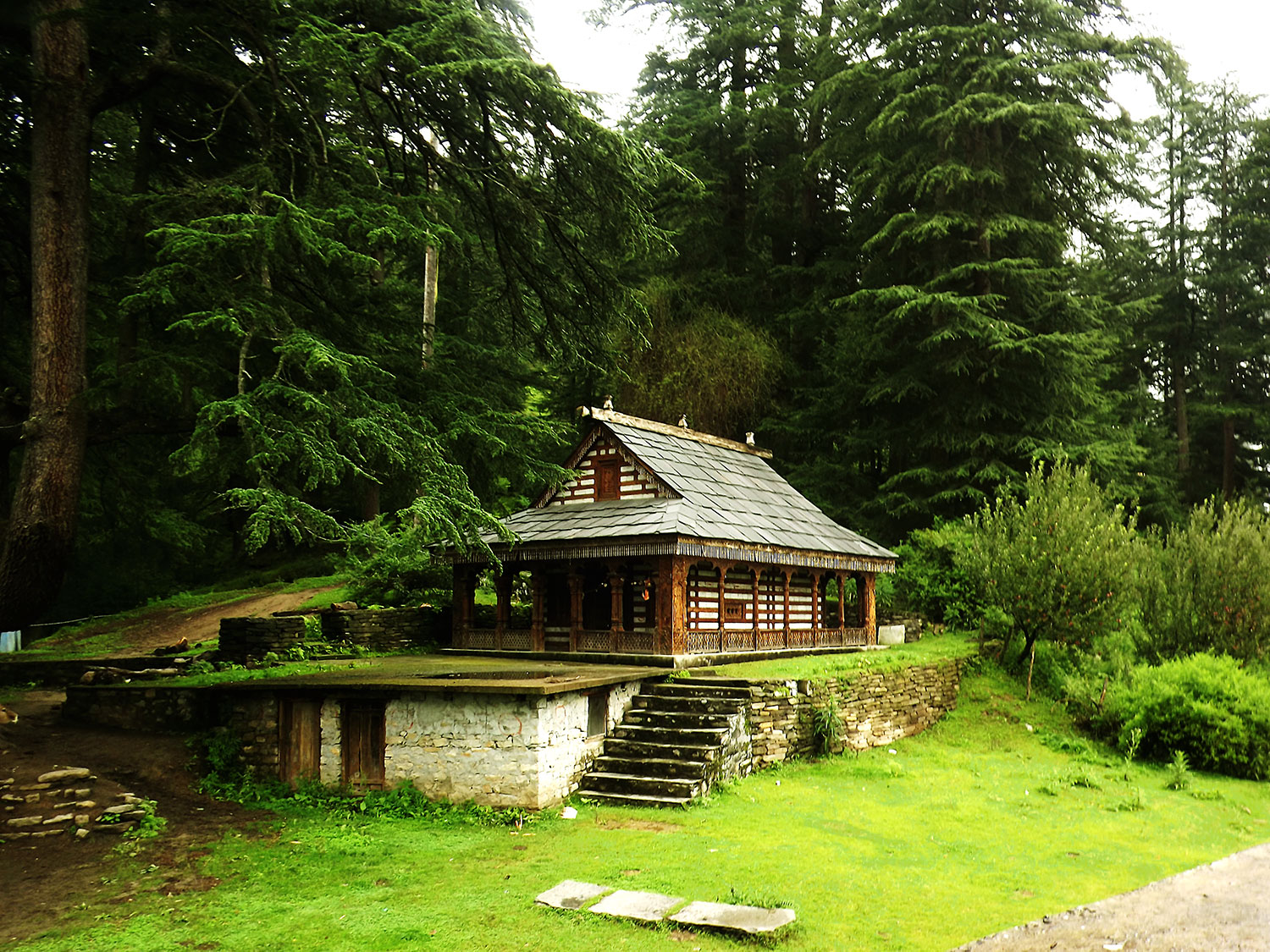

Atop the quiet little village of Bhanara that grows in random steps amidst pockets of orchards and farms high-up on a hill, the temple Shirgan Naga is a picture of enchanting tranquility to the backdrop of a dense forest of cedar Deaodars, mysterious and alluring with light wisps of smoky mist, on a rainy day in the month of August, 2016.
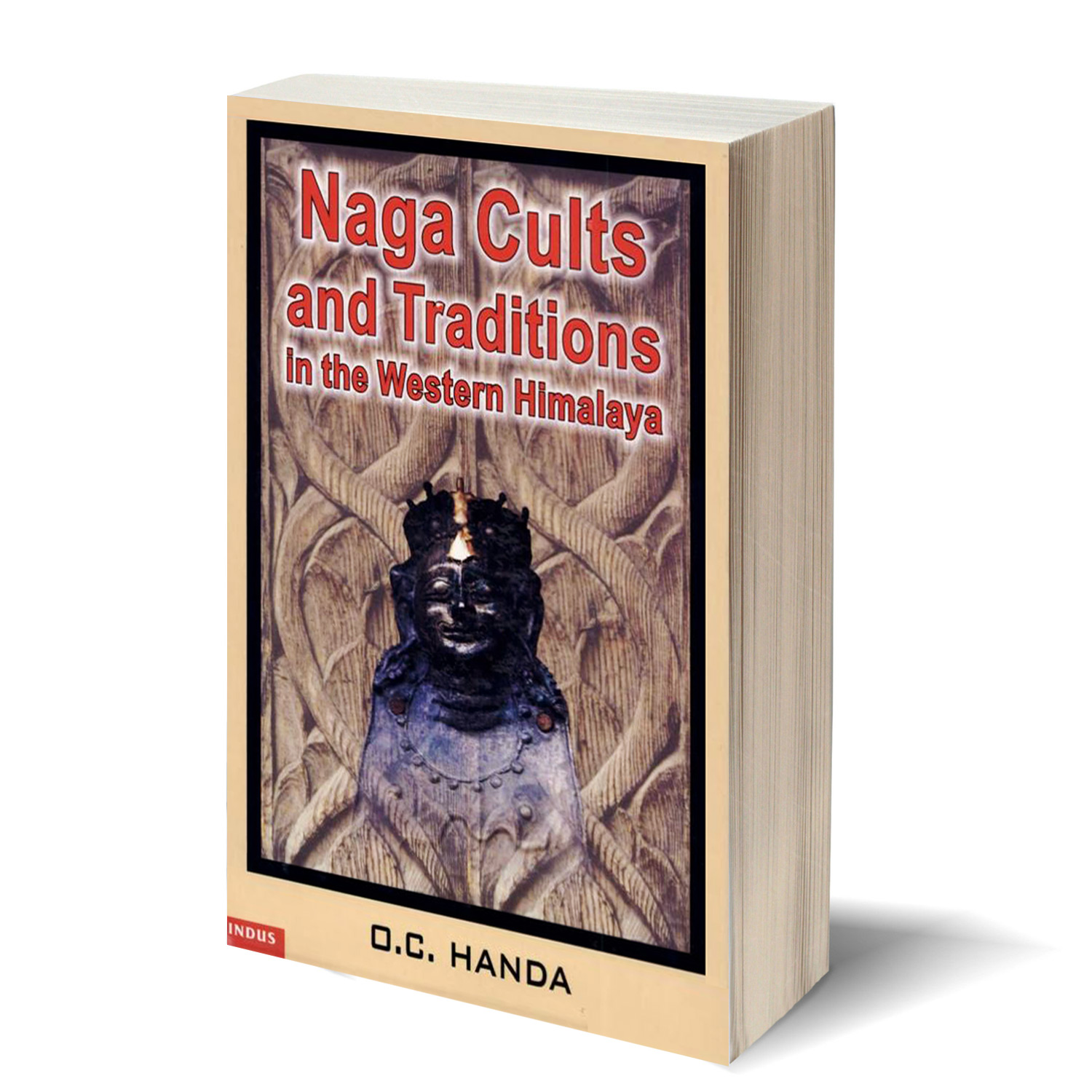
Shaped by a new generation of architects versed in the Kath Kuni form of architecture, a building technique that’s popular in this part of the Western Himalayas, it is a melange of slate and tough Deodar wood with intricate carvings of the Hindu god Shiva and a hooded Cobra whose gaze, straight and unwavering, overlooks the entrance of the temple, housing a Lingam and the residing deity himself.
Legend of the Atthara Kardu, western Himalayan folklore.
In almost all versions of the Atthara Kardu, a legend from the pages of the western Himalayan folklore, that tells of how the ‘Nagas’ came to be worshiped in the hills of Himachal, Shirgan is highlighted as one of the eighteen serpent deities – see the Farbound.Net story: Behind the myth of the serpent people.
He is one of the eighteen children of the ‘Naga’ Basuki, begotten through an union with a beautiful girl from the village of Goshal, and the brother of Dhumbal, Piuli, Kali, Kana, and thirteen other serpent deities with temples in different corners of the hill state.
Like Kana, who earned his honorific after a mythical fire accident left him blind in one eye, sometimes said to have been started by his grandmother and other times by his aunt, Shirgan earned his name, by being the first to break out of the bamboo basket and making his way to the area where his temple stands today – see the Farbound.Net story: The Himalayan temple of Kana Naga at Goshal.
In the one of the several dialects spoken in Himachal, the name ‘Shirgan’ means the one that used its head – in the legend ‘Shirgan’ had broken out of the bamboo basket by smashing his way through with his head.

Digital Greetings Card by Farbound.Net – featuring the temple of Shirgan Naga.
Actual Size: 1200 x 1203 pixels
Bhanara, where the temple of Shirgan Naga stands.
The village of Bhanara where his temple stands is thought by some to be an ancient Himalayan village. The settlement finds repeated mention in the legends of the western Himalayan folklore, and was quite possibly home to one of several historical non-vedic tribes that dwelled in the Himalayas in antiquity.
Such as the Daradas, Kiratas, Khasas, Tanganas and the Parvatas (unidentified clans). As well as the Kasmiras, the Nagas and Pishachas – who were to be found in the vicinity of the present day region of Kashmir, bordering the present day state of Himachal in India.
The Nagas, in particular, have been traditionally associated with the totem of the serpent, and its plausible that the village was originally a ‘Naga’ village or belonged to some other non-vedic tribe into which the ‘Nagas’, had merged into, and later established the cult of worshiping serpent deities – see the Farbound.Net story: The Himalayan village of Bhanara.
If the legend of the Atthara Kardu is taken into consideration (inspite the chaotic jumble of superstition, mythology and zoomorphism), and which states Bhanara existed prior to the appearance of the ‘Naga’ deity, then it is possible that it was the ‘Nagas’ who had merged into an existing non-vedic culture.
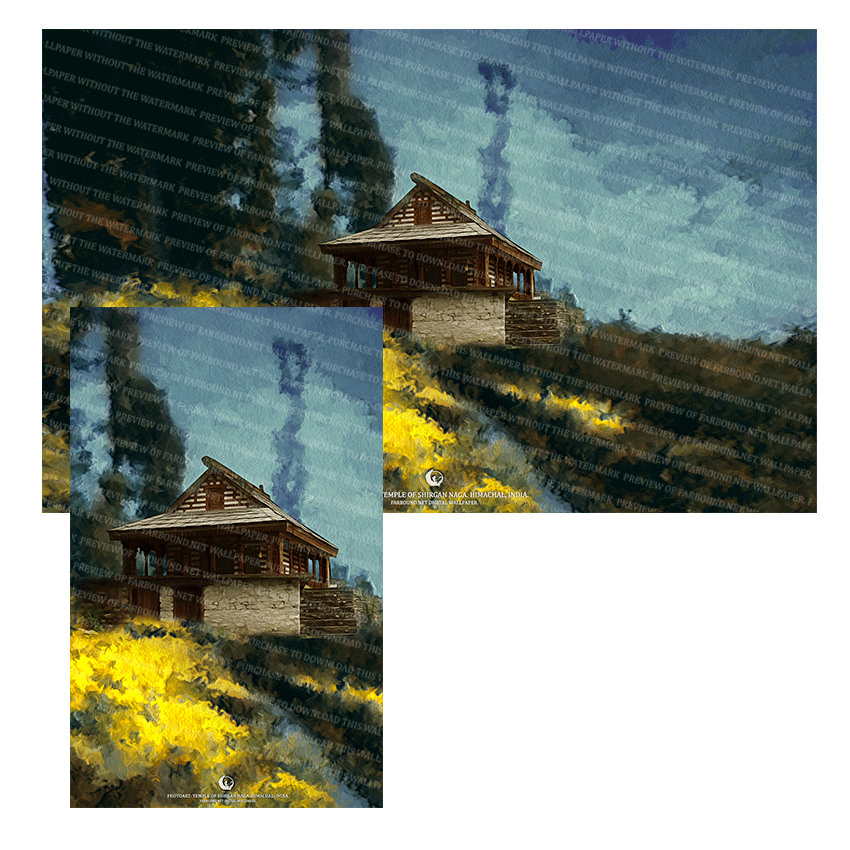
Digital Wallpapers for Desktops and Mobile Phones by Farbound.Net – featuring the temple of Shirgan Naga.
Nagas, a historical perspective.
Historically, the ‘Nagas’ are thought to have been a tribe of Tibeto-Burmese speakers who had migrated into India from the North East, sometime in 4000 Bce. According to the historian A.K Mazaumdar, they were physically similar to east Asians in features, and had boasted of high cheekbones, muscular frames and very little facial hair.
While scholars like Mudaliyar C. Rasanayagam, believed they had become a more mixed-race through intermarriages with other local tribes, including both the Harappans and the Indo-Aryans Vedics.
Their later presentation in Vedic texts as half-human, half serpent beings, was a result of their association with the serpent (the hooded Cobra) that generations of Vedic writers had merged with mythology and the supernatural to present them as mythical beings, divinities and evil spirits.
This act of zoomorphism, a prehistoric human tendency of infusing animal traits to humans is remarked upon by British-era historian James Talboys Wheeler when speaking about the ‘Nagas’.
In the process of time these Nagas became identified with serpents, and the result has been a strange confusion between serpents and human beings
James Talboys Wheeler – A History of India.
Nonetheless, Vedic texts, especially the epic ‘Mahabharat’, a poem originally composed to immortalize the Kuru race, also contains enough credible information for historians and scholars to say with certainty, the ‘Nagas’ were a people of flesh and blood.
Shirgan Naga, a bonafide deity with his own legend.
Although Shirgan is a bonafide divinity with his own unique place in Himalayan mythology, he is very often confused with Takshaka ‘Naga’, another serpent deity whose legends are mentioned in the epic Mahabharata and who is closely associated with the ancient region of Takshila, a place of historic importance and which is now in the present-day country of Pakistan.
This confusion seems to be more deeply entrenched among the local residents of the Kullu-Manali belt.
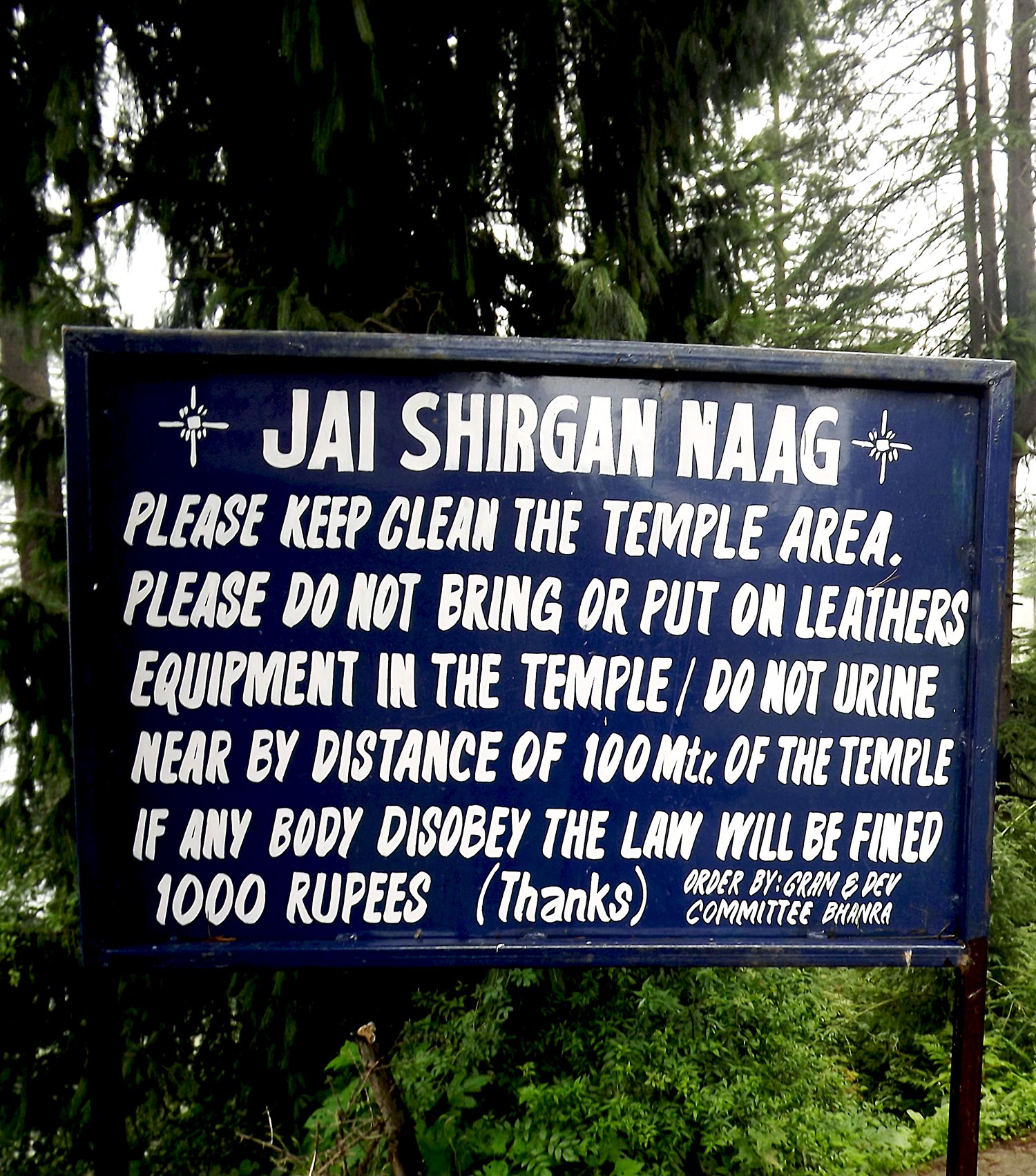
In 2016, as I had set out for the temple, after a brief stopover at Manali, every time I had inquired for directions, I was surprised to find no one was aware of the name Shirgan. In fact, and en route, the temple was described to me as the temple of Takshaka Naga, despite the presence of a large signboard inside the premises of the temple, which has his name clearly spelt out.
Shrigan Naga, patron deity of Banhara in present times.
For the residents of the village of Bhanara, however, Shirgan has been a patron deity for generations. In all this time, he has cared for the local dwellers and guarded them from all manners of harm and evil – and through his Gur (Priest/Shaman), he has solved problems, arranged marital partners and even helped name children at birth.
His story, while having picked up local flavour and altered by narrators over the years, continues to bear similarity to more recognized myths associated with snake cults in India. A form of worship scholars believe predate the dominance of the Vedic Aryans, and one that began projecting the serpent as a creative and divine force till its ultimate merger with the Hindu god Shiva under the Brahminical system.
The older temple was probably a cruder version of the new one as temples in the Western Himalayas are thought to have begun as simple mounds of stones piled up high and gradually refined upon with the passage of time.
The Shiva Lingam inside, a later addition as well, and was quite possibly put in place after this serpent deity was inducted into Vedic lore.
I F I This is an independent story describing the temple of Shirgan Naga at Bhanara in relation to his legends in Himalayan mythology. The description of the Serpent Deity was curated from literary sources and not created out of local information. I






Shirgan nag and takshak nag are same, there is no difference between the two.
Hi, Taksha Naga is Taxila. Now in Pakistan. His legend is very different from Shirgan Naga. Taksha Naga is said to have dwelled in the forest of Khandava, generally thought to the region of Delhi and later Taxila. The legend of Shirgan Naga developed in this region of the Himalayas. It comes from the Atthara Kardu or 18 serpent deities. It is different.