Delhi after the rebellion.

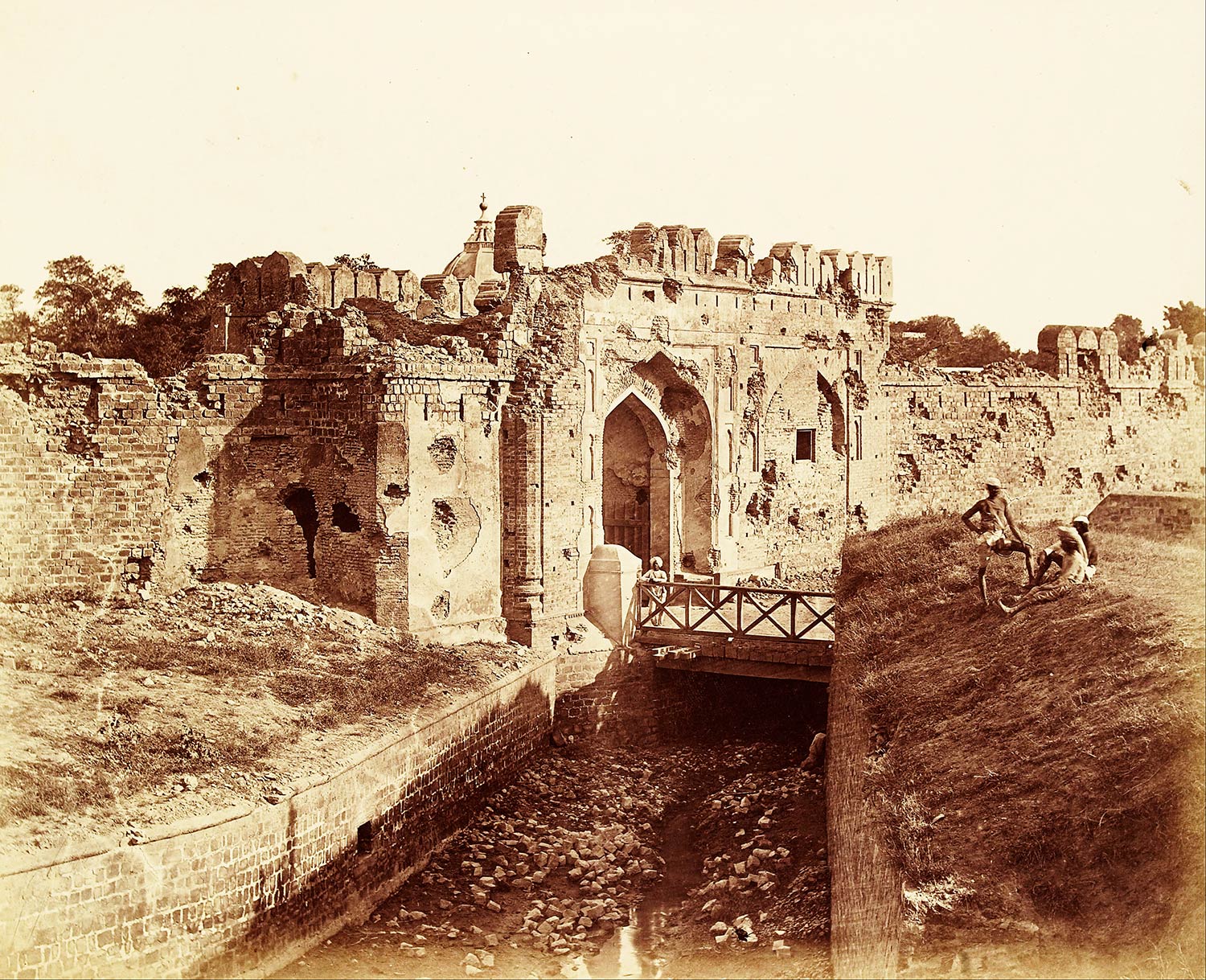
The Kashmiri Gate of Shahjahanabad. Old Delhi. 1858

Photographer: Felice Beato.
Old Delhi, India.

Taken a few months after the eruption of the Indian Mutiny of 1857, a photograph by British-Italian photographer Felice Beato, reveals a moat with floating debris and the damaged surface of what once was the Northern gate of the old city of Delhi – locally known as the Kashmiri gate.

Founded by the fifth Mughal emperor Shahajahan in 1639, as Shahjahanabad, the city was a major rebel stronghold during the 1857 Sepoy mutiny with the Kashmiri gate itself the target of a British assault.

On 14th September, 1857, loyal Indian and English soldiers of the third column of the besieging British army had led a suicidal charge to blow the barred doors with gunpowder, under a constant volley of enemy fire from barely ten feet above. They had eventually succeeded in demolishing a part of the gate – albeit after losing many men.

Popular in Vintage Years

What's new

Indulge

Browse and Buy

More Stories

And it took a mutiny to change policing: Why after the Mutiny of 1857, the old Kotwali system was replaced.

A vintage photo from 1900, and why policing changed in British India, from the Kotwali system of the Mughals.

The political deadlock.

Jinnah and Gandhi in Bombay, September, 1944.

Faculty St. Xavier’s 1953-54.

Indian and Belgian professors pose for a photo, 1953-54
Siddhartha Mukherjee
Siddhartha Mukherjeehttps://farbound.net
I believe in the wisdom of self-reliance, the moral philosophy of liberalism, and in individualism. When not researching and writing editorial content or creating digital products, I spend my time with my dogs and live a life of solitude.

LEAVE A REPLY

Please enter your comment!
Please enter your name here