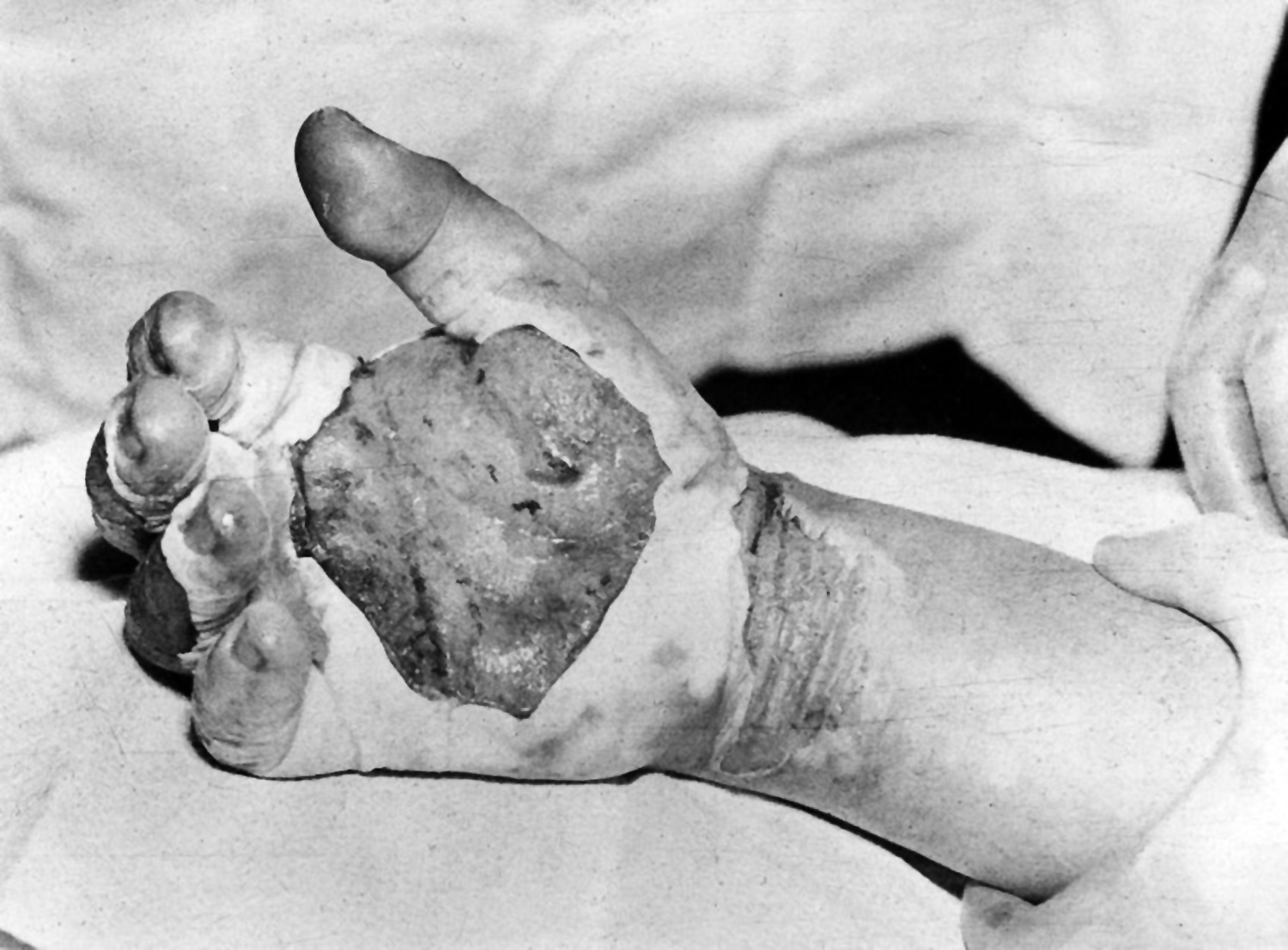

Produced inside a care unit of the Los Alamos Hospital at Los Alamos city in New Mexico, the terribly burnt and blistered hand in focus is of Harry K. Daghlian – a technician unfortunate to be exposed to a lethal dose of radiation exposure on the 21st of August in 1945.
Daghlian at the time of his mishap was working inside an Omega Site laboratory – located some 6,000 miles away from Hiroshima and Nagasaki. Cities, that were already reeling from the after-effects of radiation exposure, having been bombed almost two weeks before. He was working for his PhD.
The Los Alamos hospital were he was admitted was a state of the art medical facility of the atomic city of Los Alamos, built to house the scientists, technicians and staff of the Manhattan Project.
When Harry Daghlian joined the Manhattan Project.
Born on the 4th of May in 1921, Harry Daghlian’s city of birth was Waterbury in Connecticut. He was a former MIT graduate and a student of Purdue University at West Lafayette in Indiana. In 1943 when he was working for his PhD at Purdue University, he was recruited into the Manhattan Project by his mentor Marshall Glecker Holloway, who was invited by Robert J.Oppenheimer to join the secret project with his research team.
While Holloway and his team of undergraduates moved into Los Alamos in September 1943, Daghlian arrived, a few moths later, in 1944, and once there was made a member of Otto Frisch’s, Critical Assembly Group.
At Los Alamos, the intelligent Daghlian had quickly become skilled at assembling critical components for nuclear experiments with ease and an experienced technician. Barely three months prior to his mishap, he had assembled the critical components of the Trinity Gadget, for its test detonation in the Jornada del Muerto desert in July 1945.
Tickling the Dragon’s Tail.
Daghlian’s mishap had occurred during a phase when scientists at Los Alamos were experimenting with nuclear fission to better understand the sequence and produce improved atomic weapons. This new phase of experiments were undertaken after it was discovered that both the uranium based Little Boy and the plutonium Fat Man, in spite of their enormous destructive power, were, nonetheless, flawed weapons.
In this post-war phase of development, when scientists and technicians had prodded with care in a project known as Tickling the Dragon’s Tail, and which was conceived to perfect the sequence of an atomic chain reaction. A confident Daghlian, absorbed in experimenting, had paid less attention to protocols when dealing with dangerously volatile material.
Harry Daghlian’s Project.
The experiment Daghlian was involved in at the time had required him to build a tungsten carbide enclosure around a plutonium core with 13 pounds tungsten bricks. To warm him of radiation exposure there was a neutron monitor, that had been specially configured to alert scientists and technicians of approaching thresholds with a string of sharp clicks.
Having conducted the experiment before, to gauge the critical points of a chain reaction, he was quite proficient with the steps.
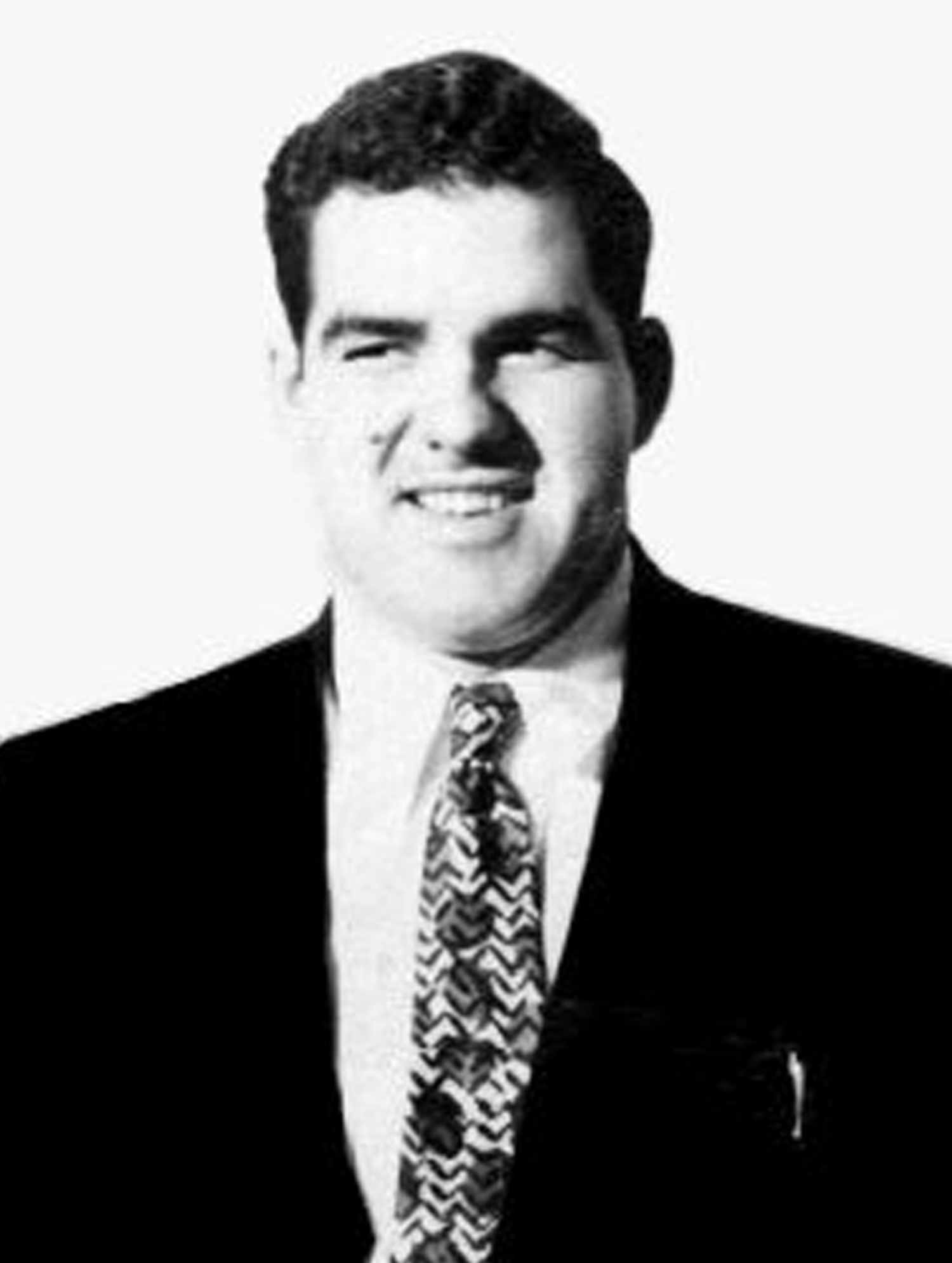
How Harry Daghlian’s mishap occurred.
On the 21st of August 1945, however, Daghlian was eager to try out a new idea and had returned to the Omega Site laboratory after having dinner and attending a lecture. Earlier in the day he had put in a twelve hour shift.
Inside the laboratory he had hastily constructed a 236 kg tungsten enclosure with only a military guard present a little distance away. He had paid little attention to the clicks of the neutron monitor which had continuously emitted warnings of critical points.
The mishap had occurred at around 10:00 p.m. when he was about to add the final tungsten brick to the enclosure and was startled to find the neutron monitor rattling furiously. In a moment of panic, he had swiftly pulled back the brick but it had slipped from his grasp and landed in the center of the enclosure, close to the plutonium orb.
Without thinking, he had then thrust his right hand into the enclosure and pulled the brick out. Pulling the brick out, however, had not helped. As the neutron monitor had continued to rattle, he had attempted to overturn the table.
Finding that impossible to accomplish he had eventually removed each and every brick by hand, till the clicking sounds from the monitor had finally abated.
Later at the hospital, he would reveal that at the very moment he had put his hand inside the enclosure he had felt a tingling sensation and saw a blue mist forming round his hand.
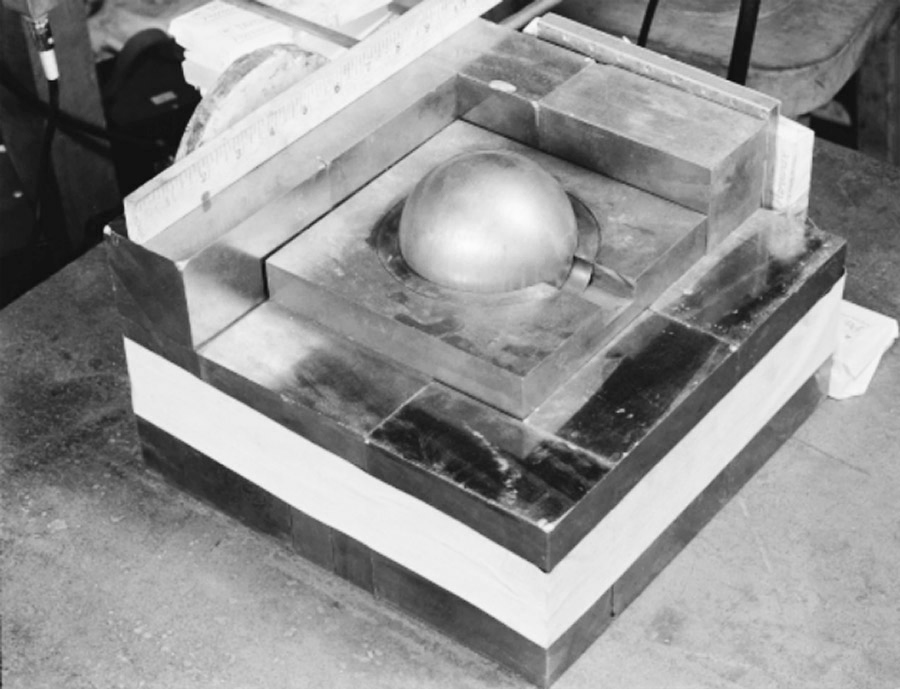
Although Daghlian’s brave effort in controlling the situation had averted a larger catastrophe that evening, he was, unfortunately, exposed to 510 rem of radiation from the 6.2 kg plutonium orb that was nestled inside a 236 kg tungsten reflective enclosure – and which in the end proved fatal for him.
In spite of intense care and medication, he passed away on the 15th of September in 1945 – some 25 days after the mishap.
A photo taken during Harry Daghlian’s hospitalization.
One out of a series of photos that were produced for documentation with the consent of Daghlian, this photo was taken a few days before his death in the month of September in 1945.
By this time he was completely bedridden and afflicted by several other ailments other than just his injured hand. His blisters were repeatedly cut open, cleaned and the dead skin scraped away. Treatment of one ailment had led to the emergence of another.
His condition while showing initial signs of recovery had ultimately deteriorated. His heartbeat was once recorded to be at 250 beats per minute. He suffered from internal organ failure, loss of skin, diarrhea, cramps and high fever. Later even anaesthesia was ineffective against the pain.
In the last hours, he had lost all body hair and lived on intravenous fluids – cared for by his mother and sister, who were trained nurses.
After his death, an initial press statement pronounced his death due to chemical burns – which was later revealed to be from gamma and neuron irradiation. The initial medication administered to him at the Los Alamos hospital was measured out in proportion to the radiation absorbed by the coins in his pocket.
Harry Daghlian, the first American casualty of radiation irradiation.
Widely known as the first American casualty of the atomic age, Daghlian’s death, however, would not be the only one to come out of those pioneering days of atomic research. Some nine months later, his supervisor, Louis Slotin, also met with a similar mishap in the May of 1946.
Slotin was exposed to an even higher level of radiation poisoning and survived for only nine days,see the Farbound.Net story: Risky Experiments. The military guard on duty was unharmed – having been exposed to only 50 rem of radiation.
Daghlian is commemorated with a granite monument in New London in Connecticut, U.S. His death had stunned the scientific community at Los Alamos.
Photographer, John Michnovicz.
This photo was produced by John Michnovicz. A wartime army photographer, Michnovicz was transferred to Los Alamos to document the scientific community in the October of 1944.
Michnovicz was initially drafted into the army but because of having flat feet was disqualified from joining the infantry. He was, however, put into advanced technical training and educated with an accelerated course in physics and engineering.
He was assigned to the Manhattan project as a support technical staff member and while there had worked as a member of a large photo documentation group – tasked with documenting the enormous undertaking.
During his time at Los Alamos, Michnovicz produced over 1,000 photos of events and every day life at the secret city. He also produced photos of both Daghlian and Slotin, during their hospitalization at the Los Alamos hospital.
Some of his photos are housed with the Los Alamos National Laboratory’s National Security Research center’s archives. Michnovicz, passed away at the age of 81 in 2005.
I F I This is an Independent Story highlighting this Vintage Photo of the burnt and blistered hand of physicist Haroutune Krikor Daghlian Jr at the Los Alamos hospital. The story also sheds light on Harry Daghlian as a student and technician, of his fatal mishap and of the symptoms that appeared during his hospitalization. It has been created from facts curated from literary and historical sources. I