
Dechen Chokhor Mahavira, Sarabhai, Bhuntar, Himachal, India.
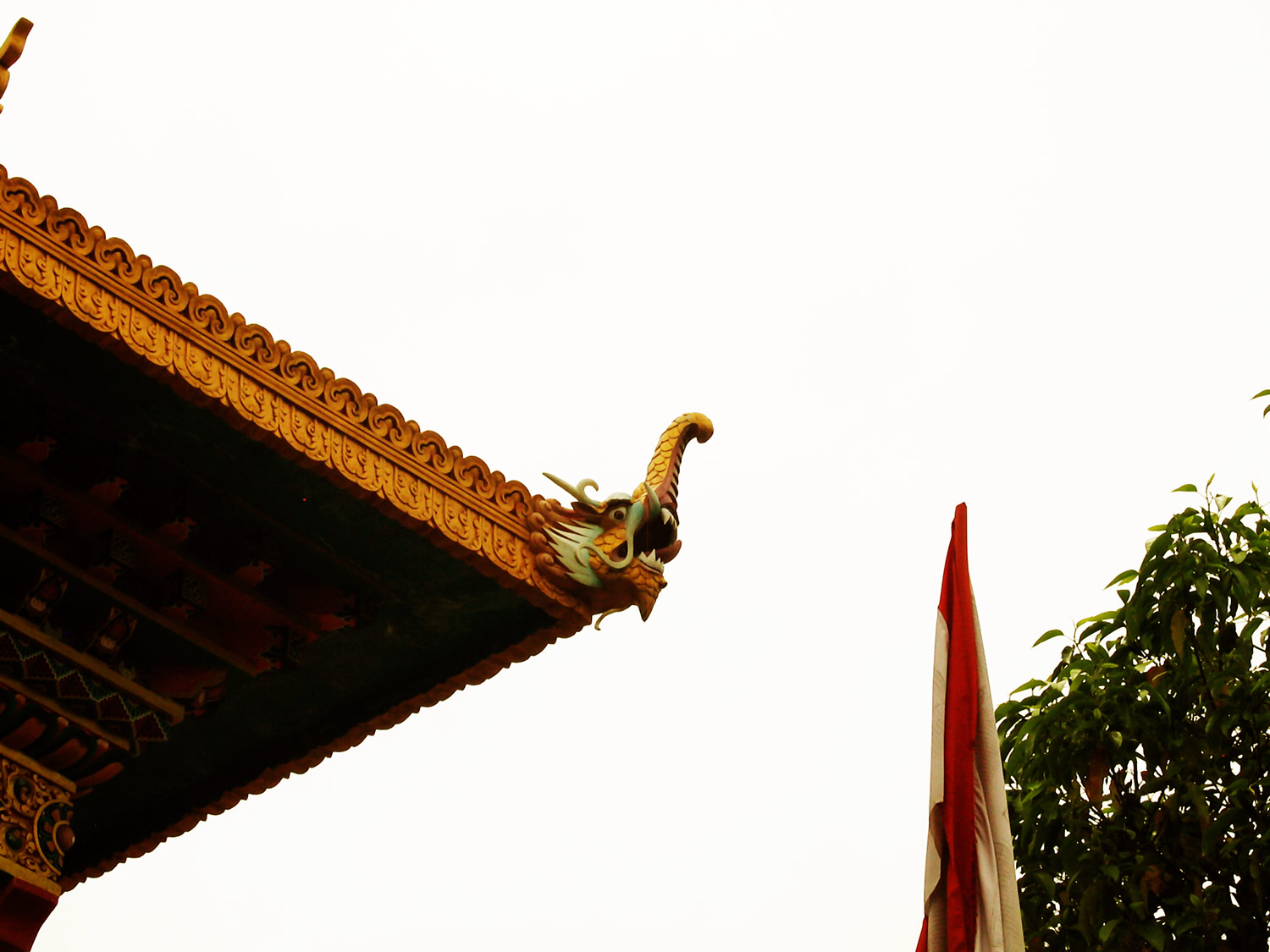
Chu-Srin, more than a rainwater gargoyle.
Gargoyles have been used for centuries as an architectural element for protecting buildings and monuments from excessive rain water across the east and the west.
Traditionally, these artistically done water channels (resembling statues) have come in deliberately shaped fantastical appearances for no apparent reason other than to be interesting decoration pieces that serve a very practical purpose – unless one considers the medieval church in Europe that took a fancy for hideous gargoyles to convey clerical messages.
Chu-Srin, however, is more than an architectural element and not fierce to behold for the sake of being fearsome. In Tibetan Buddhism, this sea dragon is a potent symbol of power inspired by the death grip of the crocodile and predominantly found on weapons of war – though in reality the beast is only partially the killer reptile it is said to be.
The mythical creature is possibly the most complex hybrid in existence with several animal parts making up its whole including, the upturned trunk of an elephant, the jaws of a crocodile, the eyes of a monkey, the tusks of a wild boar, the scales, tendrils and gills of a fish, the tail of a peacock, the mane of a horse and the claws of a lion.
That Buddhism shares many traits of its once parent religion Hinduism is evident in many of its symbols and philosophies. Chu-Srin for instance is not a Tibetan invention but that of India’s Vedic forefathers, eons before the birth of Buddhism itself. The creature was originally known as the ‘Makra’ with attached symbolism that changed over the years and currently occupies the tenth Zodiac slot in the Hindu calendar, in place of Capricorn. What actually led to its creation is unknown.